
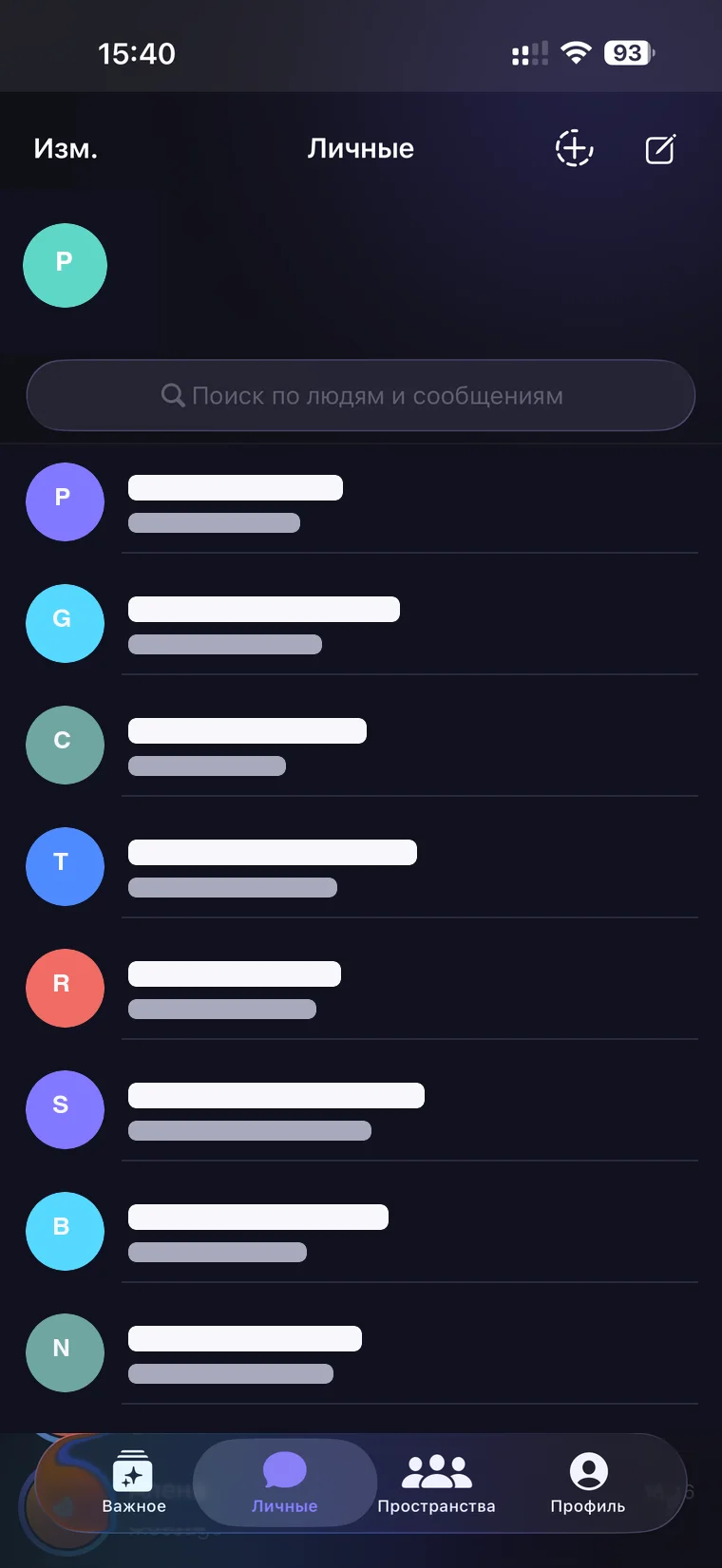
PING emerged from a very simple concern: an important message must get through, and a person should know that they can be reached. Not as a technology slogan, but as an everyday need for a family, a team, and any group where silence in a chat sometimes means not calm, but uncertainty.
I am building PING not because the world needs one more messenger. I am building it because people need a clear signal: I’m here, I received it, I’ll reply, everything is fine.
Why this page exists
My name is Ilya Serdyukov. I am the founder and developer of PING. This page exists so that journalists, partners, and early users can see not only the messenger interface, but also the person responsible for its purpose.
For me, PING does not start with buttons, stickers, or big promises. It starts with a question: what happens if, at an important moment, I can’t quickly message a loved one, confirm an agreement, organize a family chat, or understand who is responsible for what?
A good messenger should not add anxiety. It should reduce it: briefly show status, separate important messages from noise, help people make agreements, and avoid losing context.
Communication context
As of the date this page was updated, digital communication in Russia remains an unstable environment. On August 9, 2024, Roskomnadzor restricted access to Signal, as reported by Interfax. On October 8, 2024, access to Discord was restricted, which was also noted by Interfax.
In August 2025, Russian authorities announced partial restrictions on calls in Telegram and WhatsApp. Associated Press clarified that the restrictions applied to audio calls, and users complained about dropped connections and an inability to hear each other properly.
In the same year, 2025, the government added the Max digital platform to the list of apps required to be preinstalled on electronic devices; the relevant information was published on the Russian Government website. For users, all of these events add up to one practical question: how do you stay connected when the rules around familiar channels change faster than family and work arrangements?
What PING does differently
Many apps can send a text message today. But the modern communication problem is not only about writing a message. The problem is that everything important often lives in one endless list: personal conversations, family matters, school announcements, work decisions, documents, calls, and random notifications.
PING is designed as a messenger where a message does not get lost in the general noise. It has an addressee, a status, context, and a clear place inside the space where people actually live or work.
Spaces instead of a single shared feed
A family can live in its own space. A team can live in its own. A class, club, sports group, or small community can have a separate place with its own structure. This does not turn a chat into a complex management system, but it helps people immediately understand where the conversation is, where the decision is, where the file is, and what the next step is.
A message as an action
An important message should be more than just a line in a history thread. It may require confirmation, a reminder, a deadline, a responsible person, or a status. This approach is especially useful where people are making real-world arrangements: who will pick up the child, who will buy groceries, who confirmed the meeting, who is already on the way.

What PING means
In networks, ping is a short signal that helps determine whether another device is available and responding. For a messenger, that meaning has become human: I’m here, I received it, I’ll reply, I got there, everything is fine.
The name PING keeps the product in the right frame. A messenger should not be a heavy social network inside your phone. It should quickly send a clear signal and give people back a sense of connection.
Editorial product principles
- Fast. A message should travel by a short and reliable route.
- Clear. The user should see what is happening with the message and who is waiting for a reply.
- Friendly. The interface should not feel cold, overloaded, or intimidating.
- Precise. Important announcements, tasks, and decisions must remain accessible.
- Private. The user should clearly understand who can see their data, number, status, and location.
Privacy in plain language
Privacy cannot be hidden in a long document that nobody reads. The product should provide visible answers: who can message you, who can invite you to a group, which devices are connected to the account, who can access location, and how to disable unnecessary access.
For PING, privacy is not a marketing word, but a product constraint. If a feature helps communication but makes control over data unclear, it needs to be reconsidered.
For media and partners
A short summary that can be used when preparing a story:
- Founder: Ilya Serdyukov, developer and author of PING’s product concept.
- Product: PING, a messenger for personal, family, and group communication.
- Mission: to preserve clear communication when familiar channels are unstable and important messages get lost in the general flow.
- Focus: spaces, statuses, confirmations, privacy, and clear message delivery.
- Position: PING does not claim to replace the entire internet. It solves a more specific problem: making communication between people calmer and clearer.
What’s next
PING is in development. Features will be added, tested, and changed, but the main principle is already defined: important messages should not disappear into chaos, and connection with loved ones should not depend only on whether the usual channel works today.
PING. Clear signal. Fast reply.