Digital etiquette: how to use chat mentions correctly
We analyze the culture of using mentions in chats: why tags are an emergency measure, how to stop creating information noise, and how to organize your notifications without stress.
When is it appropriate to use a tag for all chat participants?
Tagging all participants is an emergency communication tool. It is appropriate to use it only when the information is vital for everyone (for example, the cancellation of an important event or an urgent change of plans). Using this tag to discuss minor details or personal questions shows a lack of respect for the time and peace of others.
How can I politely attract attention in group chats without spamming?
Politeness in correspondence begins with respect for others' focus. Instead of tagging everyone, write a short message with the essence of your question. If you need a specific person, mention only them. If the topic is not urgent, simply send the message without tags—people will read it when they have free time.
What should I do if participants in a chat are constantly tagged for trivial questions?
Silence in response to inappropriate tags is normal. You are not obligated to react to every "empty" tag. If this happens constantly, you can gently write a general request in the chat: "Friends, let's use mentions only for very important things so we don't miss notifications about truly urgent matters."
We explore how to properly use the “Do Not Disturb” status, why it is not about ignoring but is instead an efficiency tool, and how honest boundaries help the team work without unnecessary stress.
We examine why the habit of replying to messages instantly increases stress, how to transition to a culture of clarity, and why a pause in responding is the key to high-quality, calm communication.
We explore why writing skills are key to career growth, how to formulate thoughts without unnecessary noise, and why clarity in chats makes communication productive and calm.
We explain how message delivery status helps save traffic and battery life, why you shouldn't repeatedly send messages in poor connection areas, and what to do if the internet is intermittent.
PING Editorial Team5 min read126 views
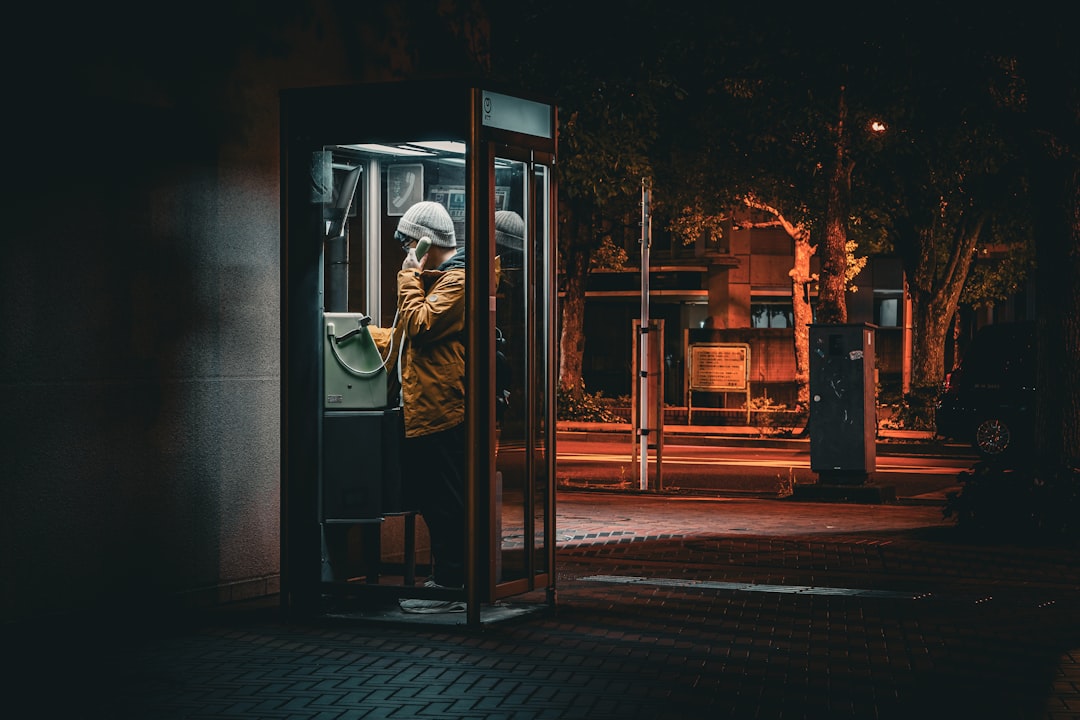
Photo: Kev Costello
Why it is important to know the message delivery status when the internet is intermittent
Imagine the situation: you are on a train, passing through a wooded area or a long tunnel, and your mobile internet starts acting unstable. You send an important message, it hangs in the 'sending' status, and you start to get nervous. Your finger involuntarily reaches for the retry button, and then again — just in case. Does this sound familiar? In such moments, the uncertainty of whether the information has reached the recipient makes us spend extra traffic on endless retry attempts, which only further overloads an already weak connection channel.
Delivery status is not just a checkmark, but a signal from the network
Many users perceive delivery statuses — those icons or labels next to the text — exclusively as indicators of whether the recipient has read the message. In reality, the technical meaning of the delivery status is much deeper. It is a kind of handshake between your device and the server. When a message moves to the 'sent' or 'delivered' status, it means that the network has confirmed the passage of the data packet.
In conditions where the signal is constantly dropping, your messenger attempts to establish a connection with the server. The status is the main indicator that the device 'understands' the state of the conversation. If you see that the status does not change, it does not always mean an application error. Most often, this is a technical signal that the network is temporarily unavailable for data transmission. By understanding this, you stop making unnecessary moves, saving not only traffic but also battery life, which is consumed significantly faster when the phone constantly tries to find the network and re-transmit the same amount of data.
Why you should not press 'send' multiple times
The main mistake in unstable internet conditions is the attempt to forcibly 'push' a message through by repeatedly sending it. Every time you press the button, the application creates a new request to the network. Instead of waiting calmly for the connection to be restored, the phone starts wasting precious resources on duplicating data. Understanding why you should check the message status helps you not to waste traffic: by waiting for the status to update, you ensure that the information has successfully left and the server has processed it. Excessive requests in poor signal conditions can cause the sending queue to lock up, and the application will start throwing errors, forcing you to restart the entire process.
Practical tips for stable operation on the go
To keep communication predictable, follow these simple rules:
Do not duplicate text. A single press of the send button is all that is needed. The server will send the message as soon as a stable signal appears.
Monitor the network indicator. If the internet is completely gone, the status icon will tell you that the delivery attempt is temporarily paused.
Give time for synchronization. On the road, the connection is often pulsating. Wait 30–60 seconds so the application has time to transmit data during a short burst of signal quality.
Limit background activity. If the connection is weak, make sure that automatic downloading of heavy media files is disabled in the messenger settings to free up the channel for text messages.
Do not reinstall the application. The problem is almost always in the quality of the connection to the base station, not in the software.
At PING, we focus on clear statuses: the user should quickly understand what is happening with their message. Our approach to signal transmission ensures reliable delivery even when a stable internet connection is a luxury. Clear communication begins with always seeing the current state of your dialogue without unnecessary noise or delays, while maintaining control over data consumption and your smartphone's battery life.
What does the technical message status mean during poor connection?
A technical message status is confirmation that your messenger has successfully exchanged data with the server. If the status does not change, it means the connection to the network is temporarily interrupted and the server has not yet received your message.
Why does sending the same text multiple times consume more battery?
Each sending attempt is a new network request. Repeatedly sending the same text forces the phone's processor and radio module to spend energy transmitting duplicate data, which drains the battery significantly faster under unstable internet conditions.
How long should I wait for a message status update while on the go?
While on the move, it is best to wait about 30–60 seconds. If the status indicator remains unchanged, it is likely that the device is in a 'dead zone' and you should wait for a more stable connection.
How to regain concentration if work chats are flooded with hundreds of messages? We break down methods for fighting chaos, configuring notifications, and rules for clear communication for productive work.
PING Editorial Team4 min read118 views
Photo: Steven Lynn
The working day of a modern office employee often resembles an endless marathon of notifications. You just start diving into a complex task when your smartphone or laptop screen lights up again: someone sent a meme, someone asked a clarifying question, and the general channel is discussing lunch. As a result, critical tasks get lost in the flow, and productivity drops along with your focus. Here is how to get rid of information noise and regain focus in your workflow.
Why we lose sight of what is important in the workflow
A constant stream of messages, where work tasks are mixed with short remarks, is one of the main causes of stress. Why do messenger notifications interfere with work? Our brain consumes resources to switch focus. Each time we are distracted by a new message signal, we need time to re-enter the context of deep work. This creates a significant information burden on the employee: even if you do not reply immediately, the mere fact that you see a list of unread messages causes anxiety and a feeling of incompleteness. Ways to reduce the information burden on an employee begin with acknowledging that a reactive communication style, where you are constantly "on call," is not a sign of productivity but a path to burnout.
Checklist: diagnosing your work chat for chaos
Before changing settings or implementing new rules, it is important to conduct an audit. Methods for combating chaos in corporate chats are effective only when you understand where exactly information is "leaking." Try checking your chat against this list:
Number of channels: Do you have a split between urgent, project-based, and casual topics? If everything is discussed in one place, chaos is inevitable.
Frequency of clarifications: How often do you have to ask "what exactly needs to be done?" If it happens often, the problem is not noise, but the quality of task setting. It is useful to know how to structure information correctly even in poor connectivity conditions.
Response style: Are statuses or pinned messages used? If key decisions are not highlighted, they are guaranteed to drown in the feed.
How to effectively filter messages from colleagues? Start small: remove notifications from all chats that do not require your immediate participation today.
How to manage data flows to see only what matters
To avoid overloading your head with unnecessary details, it is important to learn how to highlight priority messages in the stream of work tasks. First, set up notifications so you only see what is important: keep sound or vibration active only for personal mentions or channels with critical updates. Other chats can be reviewed at scheduled times—for example, three times a day. Remember that tools should help you, not create new reasons to check your phone. At PING, we focus on a clear signal: the user should quickly understand what is happening in the conversation.
Rules of clear communication: how to write so you are understood immediately
Rules of clear communication for work groups are not about bureaucracy, but about respect for others' time. If you want to avoid being distracted by unnecessary questions, formulate your thoughts so they do not require interpretation. Use headers, lists, and clear deadlines. How to avoid being distracted by extra messages throughout the day? The answer is simple: write fewer meaningless messages yourself. When your communication becomes precise and concise, colleagues subconsciously begin to reply in the same style. This creates a healthy environment where communication supports work rather than replacing it.
What exactly is considered information noise in a work chat?
Information noise in a work chat is a collection of unstructured data: a lack of context, mixing personal and work topics, and an overabundance of discussions that do not require the immediate participation of all team members.
Should I turn off notifications completely to focus?
It is not recommended to turn off all notifications entirely, as you might miss critical changes. It is better to configure notifications selectively: keep alerts only for personal mentions or high-priority channels, and review secondary chats during work breaks.
Does a large volume of messages always mean poor team productivity?
No, the number of messages does not always correlate with low productivity. The problem usually lies in the lack of a communication culture and ineffective tools that do not allow separating the important from the secondary.
We look at why messages arrive with significant delays when a VPN is enabled, how to localize network glitches, and what to check in your settings to restore instant notification delivery.
PING Editorial Team5 min read113 views
Photo: Marwan Ahmed
Why do messages arrive with a significant delay when using a VPN
The situation is familiar to many: you turn on your usual network security tool, and suddenly, chatting starts to resemble carrier pigeon correspondence. Notifications arrive five or ten minutes later, or sometimes require you to open the app to force a feed update. Why does this happen, and can you restore instant delivery without sacrificing security?
How a VPN affects message receipt speed
When a messenger is running normally, a message follows a short path: from your device to the provider's servers and then directly to the recipient. This route is optimized for transmitting the tiny data packets that make up text messages. As soon as you activate a third-party service to change your location or protect your traffic, this path is artificially lengthened. Data is forced to first go to an intermediate node — a server in another country — and only then travel to the recipient. At PING, we emphasize a clear signal: the user should quickly understand what is happening in the conversation. Additional links in the transmission chain always add “weight” to each request, turning instant exchange into a sequence of micro-delays that add up to noticeable waiting times.
Why network delays occur
The main reason for delays lies in the specifics of network protocols. Most messengers use specific communication channels that require a constant “handshake” between the server and your device. A VPN service encapsulates all your traffic, wrapping it in additional packets. If the VPN server's bandwidth is low or it is located on another continent, the network packet may be lost or arrive with a delay (high ping). As a result, your smartphone does not receive the signal about a new message on time, as the connection “goes to sleep” while waiting for a response from the remote gateway.
Diagnostics: how to determine if the network is the bottleneck
Before changing device settings, it is important to localize the problem. The fastest way is to temporarily turn off the VPN. If messages start “arriving” instantly after deactivating the service, the problem lies in the quality of the connection to the intermediary server. It is important to understand that many public VPNs are overloaded and their bandwidth is unstable. If delays persist even with the VPN turned off, it is worth checking if “Battery Saver Mode” is enabled on your smartphone, which forcibly limits background app activity to save power. Operating systems often aim to “put to sleep” background processes to extend battery life, and messengers are often the first to be affected.
Checklist: how to restore communication speed
If working on the network through third-party tools is necessary, try the following steps to restore a comfortable pace of communication:
Select another server: Geographical proximity to you often solves the delay issue. If you are in Europe, choose a server in the European region.
Background activity settings: Ensure the messenger is allowed “Background Activity” in your operating system settings. Systems often reset these permissions after a software update.
Traffic exclusions: Many VPNs allow you to set up “Split Tunneling.” Add your messenger to the exclusion list so it works via a direct connection, while the rest of your traffic goes through the secure tunnel.
Check network filters: Ensure there are no active antiviruses or firewalls on the device that may incorrectly flag encrypted traffic as suspicious and delay its processing.
Clear cache: Temporary app files can accumulate, creating conflicts during network reconnections. Regularly clearing the cache helps the app restore connection with the server faster.
Remember: clear communication requires a stable channel. Sometimes it is enough to simply change the entry point or switch from Wi-Fi to a mobile network for messages to stop “hanging” in transit. If the problem remains critical, try temporarily using a different connection protocol provided by your VPN provider, as some of them (for example, TCP vs. UDP) work much more stably under an unstable internet signal.
Why are delays considered normal when using a VPN?
A VPN creates additional distance for data transmission and adds a layer of encryption, so minor delays are unavoidable. However, if delays amount to several minutes, it usually indicates that the chosen VPN server is overloaded or its protocols are unstable.
What should I do if messages arrive with a delay even when I turn off the VPN?
If the problem persists without a VPN, the issue lies in your phone's settings or your provider. Check your battery saver mode, background activity permissions for the app, and clear the cache — this often resolves delivery issues.
Can network filters slow down message delivery?
Yes, security systems and firewalls can classify proxy traffic as non-typical and temporarily restrict data transfer speeds or hold them for additional inspection, which directly affects notification delivery.