How to hide location on photos before sending: a privacy guide for images

We explain how photos can reveal your location, why you need to delete metadata before sending, and how to configure your phone's camera to protect your personal data.

a table with a cell phone and a glass of water
Photo: Svitlana

How to hide location on photos before sending: a privacy guide for images

Modern smartphones are smart devices that try to remember everything: from the camera model to the exact coordinates where each shot was taken. This feature is useful for sorting archives, but it turns every photo into a hidden map of your movements. If you send such a file, the recipient can potentially find out your home address or your commute route. We explain how to maintain digital hygiene and share photos safely.

Why photo files store shooting locations

When taking a photo, the camera automatically writes a set of metadata known as EXIF to the image file. It stores technical parameters: shutter settings, device model, and most importantly, GPS coordinates. These data are embedded in the file structure. Many users do not realize that simply sharing a snapshot in a chat transmits much more information than they intended. To avoid accidental disclosure of personal information, it is important to know how to disable the transmission of image metadata or prevent the camera from saving geotags altogether.

Camera settings: how to stop recording geotags permanently

The simplest way is to stop data recording at the system level. There is a corresponding toggle in the settings of any modern smartphone. Go to "Settings" — "Privacy" — "Location Services." Find the camera application in the list and set the permission to "Never" or "Don't allow." After this, no new snapshot will contain your coordinates. This is the best way for preventive protection.

Step-by-step guide: how to clear photo EXIF data before sending

If the photo has already been taken, you can remove the metadata before sending. Most system galleries on Android and iOS allow you to do this manually or during the sending process. On iOS, for example, simply tap "Share," select "Options" at the top of the screen, and turn off the "Location" toggle. If you are using special applications for EXIF cleaning, just select the file, click the data removal button, and save the result. Your file will be free from hidden coordinates.

Checklist: how to ensure the recipient doesn't know where the photo was taken

To be sure about the safety of your transfers, follow these steps: 1. Check your camera settings if you often take photos at home or in other personal places. 2. Use the built-in features of messaging services to remove metadata during transfer. 3. If you need to share a photo as privately as possible, use trusted communication tools. At PING, we focus on a clear signal: the user should quickly understand what is happening in the conversation. This allows sharing content without worrying about hidden "digital tails" that could compromise your privacy.

Frequently asked questions

Do all messaging services automatically remove location data from photos?

Not all applications do this by default. Many messaging services compress files, which automatically deletes metadata, but it is better not to leave it to chance and clean sensitive photos yourself.

Which is better: disabling geotags in the camera or deleting them before sending?

Disabling geotags in the camera is a preventive measure that protects all future shots. Manual cleaning is useful for already created photos when you want to be 100% sure about the safety of a specific file.

Besides the shooting location, what other data does metadata cleaning hide?

Clearing EXIF data also removes information about the phone model, exact date and time of shooting, and sometimes the software used to process the image.

Was this article useful?

Your feedback helps make PingBook more precise.

Share this article

Related articles

Следующие истории PingBook

All articles

How to protect a group chat from bots and unwanted participants

We examine why bots end up in chats and how administrators can close groups to outsiders, set up moderation for new entries, and protect communities using simple digital hygiene rules.

How to protect a group chat from bots and unwanted participants

Frequently asked questions

Why do bots get into the chat even if I have a private link?

Even if the link is hidden, bots can enter a chat through public directories or leaked conversation links. Manual verification of each new participant is the only way to 100% eliminate random bots.

Is it better to set up joining automatically or through approval?

For small communities, joining via administrator approval works best. This eliminates spam and creates a truly safe space.

What should I do if a suspicious account joins the chat?

Remove the account from members and block it. After that, update the invitation link settings or replace it with a one-time link.

PingBook

Следующие истории PingBook

How data protection is structured: understanding modern messaging security technologies

We examine how modern security protocols work, why end-to-end encryption has become the standard, and how mathematical algorithms protect your data at the moment of sending.

How data protection is structured: understanding modern messaging security technologies

We are accustomed to believing that pressing the "Send" button triggers some kind of magical process. In reality, behind every phrase or file lie complex mathematical protocols responsible for new messaging security technologies. Understanding these basics helps stop the anxiety about what happens to your data while in transit.

Principles of end-to-end encryption for message protection

The principles of end-to-end encryption for message protection have become the industry gold standard today. The essence is simple: a message is encoded on your device and decrypted only on the recipient's device. No one in the middle — neither communication providers nor server owners — can read the content. This ensures message security without third-party access to data, turning any intercepted stream of information into a garbled set of symbols.

How data protection protocols work in modern messengers

When we discuss how modern message encryption protocols work, we are talking about an architecture that minimizes risks. The very structure of data protection protocols in modern messengers assumes that the decryption key always resides solely with the user. This means that even during temporary data storage on a server, the data remains "locked" in a digital safe to which third-party systems have no key.

Checklist: How to verify your data is protected during transmission

The question of how data is protected during transmission in messengers concerns many. To ensure privacy, pay attention to the application settings. Modern tools include security checks for message privacy when using AI and other modules. Check if there are end-to-end encryption markers in the settings or an option for manual security code verification. What technologies ensure message privacy today? Primarily, it is the use of open cryptographic standards and the refusal to collect unnecessary metadata.

Why new data transmission standards are changing our approach to communication

The way new data transmission standards protect confidentiality is changing our habits. Modern protocol architecture influences user privacy not just through encryption, but also through delivery speed. What is the security of modern messaging methods based on? On response speed and process transparency. At PING, we emphasize a clear signal: the user should quickly understand what is happening in the conversation. Clarity in protocol operation is the foundation of trust, where delays and errors are eliminated, and privacy is a default setting, not an optional feature.

Frequently asked questions

Can someone read my messages if they intercept the traffic?

Thanks to end-to-end encryption, data is transmitted in an encrypted form. For servers and third parties, it looks like a random set of symbols that cannot be read without a unique key stored only on your device.

How do I choose a messenger with reliable data protection?

Look for messengers that use recognized end-to-end encryption protocols, provide the ability to verify keys, and do not store message history in open access on their servers.

Where are my messages physically stored and how does it affect security?

Modern secure messengers store messages locally on the user's device. Cloud storage often duplicates data, which requires additional layers of protection, so local control is a more preferred path for privacy.

PingBook

Следующие истории PingBook

Choosing between a chat and a call at work: how to stop wasting time on unnecessary discussions

Choosing between a chat and a call is a critical skill for team productivity. Learn when text slows down work and why a live voice helps save time and nerves.

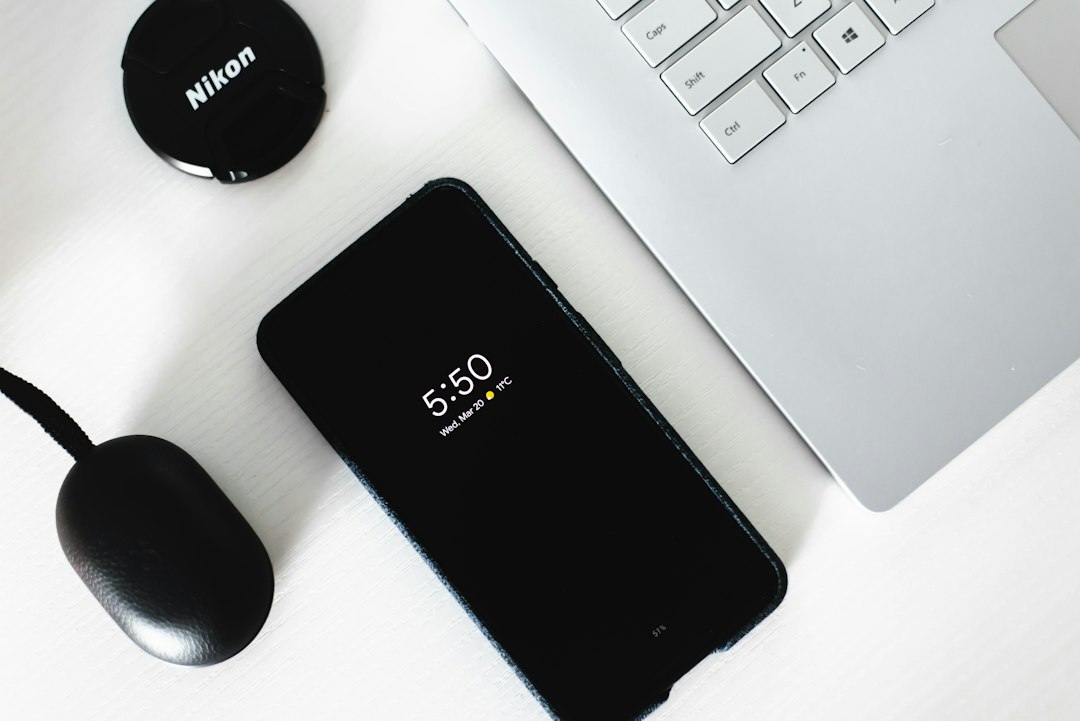
black Android smartphone beside grey laptop computer
Photo: Christian Lambert

Work chats often become a productivity trap. A simple question that seems to require an instant answer can turn into a multi-hour discussion with dozens of messages, where the core point is lost and the team wastes time searching for the truth in an endless feed. Choosing between a chat and a call at work is not just a matter of preference, but a skill for managing team resources.

When messaging becomes inefficient: signs and signals

You can tell it is time to change the format by several clear signs. If you feel that chatting is becoming ineffective and a call is needed, pay attention to the following markers: the discussion drags on for more than five iterations, participants start to contradict each other, or an "echo" of clarifying questions like "what did you mean?" arises in the chat. When understanding the context requires long explanations, it is better to discuss the task by voice. This does not mean that chats are bad—they are ideal for conveying facts, but they fall short when solving complex problems where intonation and quick reaction are important.

Selection criteria: how to understand what to choose for solving a task

The main criterion for choosing a communication format in work correspondence is the cost of time spent. Ask yourself: how much time will it take to describe the problem in text in detail, and how much for a five-minute conversation? Often, a five-minute call is better than an hour of messaging because it allows you to synchronize the vision of all participants at once. Choose text if you need to record agreements or share a link, and voice if you need to "find" a solution during a joint brainstorming process.

Rules for switching from text to a call: how not to waste colleagues' time

The transition from a message to a call should be ethical and respectful. Business communication ethics imply that you do not "break into" a colleague's workflow with a call without warning. Send a short message: "I have a couple of questions about the project, can we jump on a 5-minute call now?". This helps to understand when it is better to write a message or make a work call, while maintaining the employee's focus. A call without an agenda is the main enemy of productivity, so always indicate what will be discussed.

Saving the team's working time: why do we need clarity?

Saving the team's working time through the choice of communication format is achieved when each participant understands the value of their own and others' concentration. Communication tools should help, not create noise. At PING, we focus on a clear signal: the user should quickly understand what is happening in the conversation. The right balance between text and voice allows for faster results, saving energy for important tasks rather than endlessly clarifying details in a messenger.

Additional context on the topic is provided in the article How to record agreements after a chat discussion.

Frequently asked questions

Should I warn about a call or can I just call?

A spontaneous call can disrupt a colleague's workflow. It is always better to send a short message with an agenda in advance so that the person can prepare or choose a convenient time for the conversation.

How many chat messages is the limit before you need to call?

If the discussion requires more than three rounds of clarification and there is still no clarity, it is a signal that the messaging format has exhausted itself and it is time to switch to live communication.

What should I do after a call so the agreements are not forgotten?

Any important conversation should end with a brief summary in the chat. This ensures that all participants understood the tasks the same way and agreements are not lost. Read more about how to record agreements after a chat discussion in our knowledge base.

PingBook

Следующие истории PingBook