Why the recipient cannot hear your voice message: understanding connection quality issues

Why can't the recipient hear a voice message, and how can you record audio so it arrives clearly even with poor internet? We break down the technical reasons and provide useful tips.
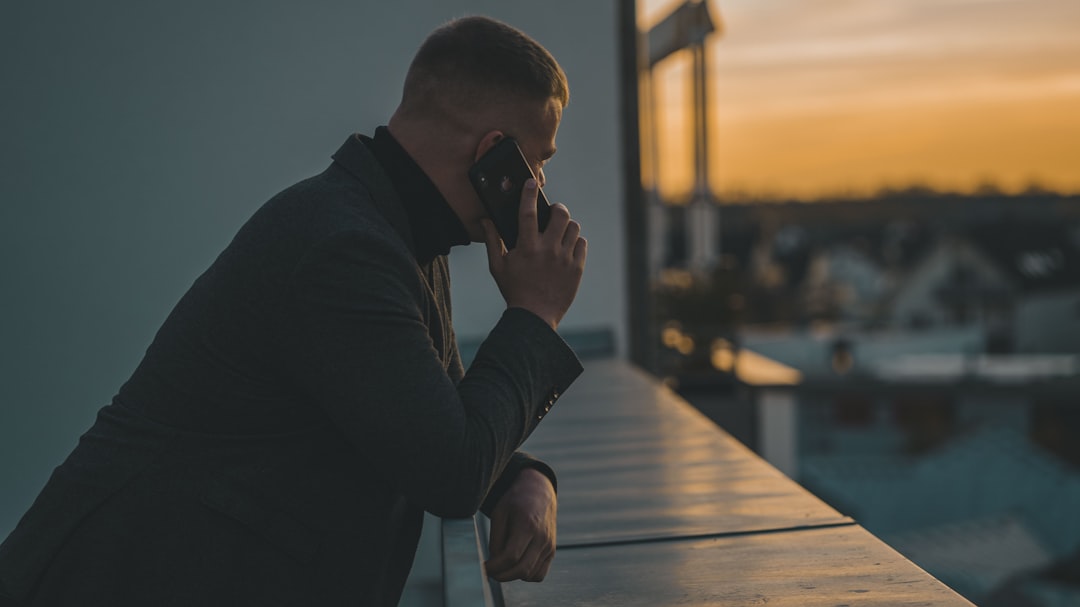
man in black long sleeve shirt sitting by the table
Photo: René Ranisch

How an unstable network affects voice intelligibility

Voice messages have become an integral part of communication, especially when we are on the move. However, a situation often arises where the recipient cannot hear a voice message or complains about severe distortion. The main reason lies in the interaction between the audio stream and network bandwidth. With unstable internet, applications automatically reduce the bitrate of the transmitted audio so that the file sends faster. Because of this, the frequency range suffers: high frequencies disappear, and the voice starts to sound muffled, metallic, or intermittent.

The impact of an unstable network on voice message delivery manifests not only in delays but also in data packet loss. If the network toggles between 3G and 4G, the messenger attempts to adapt to the variable stream, which often leads to sound fragmentation. It is important to understand that at such moments, the device is working at its limit, trying to push the signal to the server.

Checklist for recording audio: how to be heard even on a noisy street

To record clear audio messages with poor internet, you should follow a few simple rules:

  • Control the distance. Do not hold the microphone too close to your mouth to avoid clipping, and do not move too far away to prevent catching excessive echo.
  • Minimize background noise. If you are on a noisy street, try to shield the phone with your body or at least turn your back to the main source of wind or traffic.
  • Take short pauses. Start speaking a second after pressing the record button. This gives the application time to initialize the data stream.
  • Check the sending status. Do not close the chat immediately after finishing a recording. Wait a couple of seconds for the indicator to change from sending to delivered to ensure the operation was successful.

If you frequently encounter network failures, we recommend reading our article on why a message does not reach the recipient immediately: learning to read the signs of latency to better understand the mechanics of connection.

Recording diagnostics: what to do if the recipient complains about the sound

When you need to make your voice in a messenger intelligible amidst background noise, it is important not to panic. If the other person cannot hear you or the sound is heavily distorted, do not rush to record a second message immediately—it will likely encounter the same network problems. First, check your network indicator. If the signal level is critically low, it is better to switch to text format or wait for a more stable connection.

Why a clear signal is important in audio messages

The problem of poor audibility is often related not just to the microphone quality, but to how the application handles the data stream under traffic constraints. At PING, we focus on a clear signal: the user should quickly understand what is happening in the conversation. We pay special attention to ensuring that important information passes through the network with minimal distortion, maintaining natural intonation even with a weak internet connection.

Frequently asked questions

Why does a voice message sound like noise if I record it outdoors?

This happens because the noise of wind or traffic overloads the audio stream. With a poor connection, data compression algorithms are forced to cut out extraneous sounds, which often causes the useful signal to be lost along with the background interference.

Does sound quality depend on the mobile network signal strength?

Absolutely. With a weak signal, messengers limit the amount of transmitted data, cutting down audio quality to speed up delivery. This makes the sound choppy or changes its timbre beyond recognition.

Do I need to re-record a voice message if the recipient complains about silence?

It is better to wait for the successful delivery indication in the chat. If the internet is unstable, the recording may be in the sending queue—re-recording will create a data conflict and only slow down the process.

Was this article useful?

Your feedback helps make PingBook more precise.

Share this article

Related articles

Следующие истории PingBook

All articles

How to protect privacy when sending photos: clearing hidden data

We look at how photos can give away your location, why you need to remove metadata before sending, and how to configure your phone camera to protect personal data.

wallet and smartphone on white wooden board
Photo: Lumitar

We are used to sharing moments from our lives by simply clicking the "send" button under a photo from a vacation or a family outing. However, behind every such snapshot hides an invisible layer of information, technically called metadata or EXIF data. Along with the image, you might inadvertently transmit exact geographical coordinates of the shooting location, the device model, and the date the frame was created to the recipient. Understanding what is being sent along with the picture is an important skill in the modern digital world.

Why it is dangerous to send photos with geotags

When you take a picture, your smartphone automatically records technical parameters into the file. If saving geolocation is enabled in the camera settings, coordinates are fixed with an accuracy of up to a few meters. This means that anyone who receives the original file can find out exactly where the shot was taken. This puts personal data at risk when transferring media files, especially if you send shots to strangers or post them in public access.

In brief: instructions for removing photo metadata

To protect yourself, you do not need to be an expert. The easiest way to ensure safety is to use the built-in phone functions. Before sending a photo, check your gallery settings: many modern devices allow you to select the "Remove location information" option before transferring the file. If such a function is not available, you can use specialized applications to clear EXIF data from photos before sending them to a contact. Regular digital hygiene requires only a couple of seconds of attention before pressing the "Send" button.

How to disable coordinate recording and share snapshots safely

The best protection is prevention. You can change your privacy settings once to permanently disable saving geodata in files from the camera. Go to the "Privacy" or "Location" section in your smartphone settings and restrict the "Camera" app's access to location data. At PING, we emphasize a clear signal: the user should quickly understand what is happening in the conversation. Intuitive privacy settings allow you to share what is important without worrying about the accidental transfer of extra data that could violate your peace of mind or privacy.

Additional context on the topic is provided in the article Voice message security: myths, reality, and privacy protection.

Frequently asked questions

What is metadata and why is it called hidden data?

Metadata is an invisible digital footprint inside an image file. They contain technical characteristics of the camera, the shooting date, and, most importantly, the exact geographical coordinates of the place where the shot was taken.

Do all apps automatically remove geolocation when sending photos?

Not all applications process files the same way. Many modern services remove metadata automatically to protect the user, however, you should not rely on this 100%. It is better to check the app's privacy settings and manually control data transfer if you are unsure about the level of protection.

How do I make sure the camera does not record coordinates in my photos at all?

To do this, you need to go into your phone's system settings, find the "Privacy" or "Location" section, and revoke the permission to use geolocation for the "Camera" app. After this, no new shot will contain data about the shooting location.

PingBook

Следующие истории PingBook

What it means if a message is not delivered: understanding statuses and communication reliability

We explain the technical side of message delivery statuses: why they stall, how privacy settings influence visibility, and how to remain calm regarding communication delays.

woman in a grey shirt sitting on a wooden panel using a phone
Photo: Gabriel Arancibia

We are accustomed to instant reactions, so a situation where a message lingers with an uncertain status can cause understandable anxiety. It might feel as if the connection has been severed or that the recipient is deliberately ignoring you. However, the cause is usually simple technical processes rather than a human factor.

How message delivery reports work

When you press send, your message travels from your device to the messenger server, and then to the recipient's device. Technically, for the messenger to confirm the message was sent, the application must receive a confirmation from the server. Delivery reports are not just checkmarks; they are an automated signal confirming that the data packet was successfully received by the recipient. If the internet connection is unstable, this transmission process may take time as the phone attempts to restore the connection to complete the chain.

Why the recipient doesn't see that the message is delivered

It is important to understand what it means if a message is not delivered: it does not always indicate a connection failure. Often, the reason lies in privacy settings. Many users limit the visibility of their status to maintain confidentiality. Furthermore, in poor internet conditions, particularly when switching between Wi-Fi and mobile networks, data may get "stuck" during the synchronization stage. If you see that the status is not changing, it is merely an indication that the server has not yet received final confirmation from the recipient's smartphone.

Connection diagnostics: a checklist for status verification

If a message remains in the sending status longer than usual, do not panic. Try going through this checklist:

  • Check your connection: ensure Airplane Mode is off and your current internet channel is stable.
  • Update the application: older versions sometimes handle network signals incorrectly.
  • Background processes: ensure that the system is not restricted from operating in the background; otherwise, notifications and reports will arrive with a delay.

If you have verified that your internet is working correctly and the status remains unchanged for a long time, the issue is likely on the side of the receiving device or the service itself.

Why signal transparency is more important than the number of statuses

Complex systems often overwhelm the user with excessive status information, creating unnecessary anxiety. Instead of guessing why a delivery status is changing with a delay, it is better to prefer tools where the interaction logic is clear at a glance. At PING, we focus on clear statuses: the user should quickly understand what is happening with their message. This saves time and allows you to focus on the essence of the dialogue, rather than technical monitoring of whether the message has arrived or not.

Frequently asked questions

Why is a message considered delivered, but it hasn't been read yet?

A delivery status confirms that the server has transferred the data packet to the recipient's device. A 'read' status is a separate signal sent by the recipient's application itself, provided the corresponding option is enabled in their settings.

Can the recipient intentionally hide the fact that a message was delivered?

Yes, many messengers provide the ability to disable read receipts in privacy settings. In this case, you will only see the 'delivered' status and will not know if the message has been opened.

What should I do if the status doesn't change for a long time even though the internet is working?

The cause could be the application running in the background, where the system limits activity to save power. Check your notification settings and allow the application to run in the background — this often resolves the issue of 'frozen' statuses.

PingBook

Следующие истории PingBook

How to safely use neural networks in messaging and maintain privacy

We examine how cloud and local neural networks work, why it is important to control data processing, and how to maintain privacy in the age of artificial intelligence.

a man sitting at a desk using a laptop computer
Photo: Anastasiia Nelen
How to safely use neural networks in messaging and maintain privacy

Modern AI assistants have become indispensable helpers: they help draft responses, translate text, or summarize long threads. However, many users wonder: how can I safely use neural networks in messaging without risking my personal data? The main concern is that cloud models often save the entered messages for future training.

Why cloud-based neural networks may be unsafe

When you use popular cloud-based AI services, your requests are sent to the company's servers. This creates a data storage risk, as information leaves your device's perimeter. Developers often use user data to improve algorithms unless this is explicitly forbidden in the settings. To avoid data leaks, it is important to carefully review the privacy policy of each service.

Local neural networks: privacy on your device

Switching to local neural networks is a solution to this problem. Unlike their cloud-based counterparts, these systems perform calculations directly on your smartphone's processor. The advantages of local models are clear: data physically never leaves the device. You have complete control over the process, as information remains only in your phone's memory.

Checklist: how to protect your data

If you want to secure your interactions with AI, use this checklist:

  • Check if the application requires an internet connection for the AI to function. If it does, your data is going to the cloud.
  • Find the "History" or "Data Training" setting in the app and turn it off.
  • Find out if your smartphone supports offline models—this is the most reliable way to maintain privacy.

The security of your correspondence when working with AI assistants depends directly on where the computing magic happens. Choose tools that simplify data protection rather than complicate it. At PING, we focus on a clear signal: users should quickly understand what is happening in their messages. When communication is transparent and architecturally protected, you feel calmer and more confident in every conversation.

Frequently asked questions

Is it true that neural networks are always trained on my messages?

Not all AI services use your messages for training by default, but many do so automatically. Always check the privacy settings in the application to limit access to your chat history.

What is the main advantage of a local neural network over a cloud-based one?

The main difference is the processing location. A cloud-based neural network transmits data to a third-party server, while a local one performs all calculations directly on the smartphone, so the data never leaves the device.

Why are local neural networks not yet available everywhere?

Neural network operations require significant computing power. Modern smartphones are gradually receiving neural processing units, but for now, such technologies are mostly available on flagship devices.

PingBook

Следующие истории PingBook