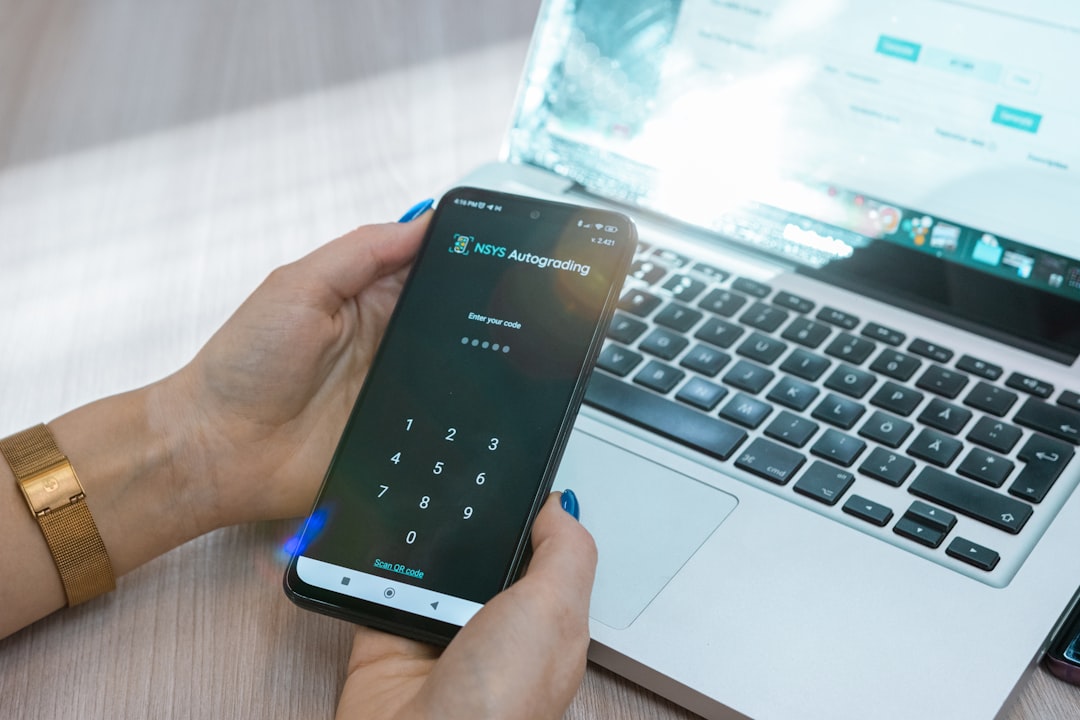
How on-device voice message processing works

We break down how on-device AI technologies make it possible to transcribe notes without sending data to the cloud, and check how safe this is for personal recordings.
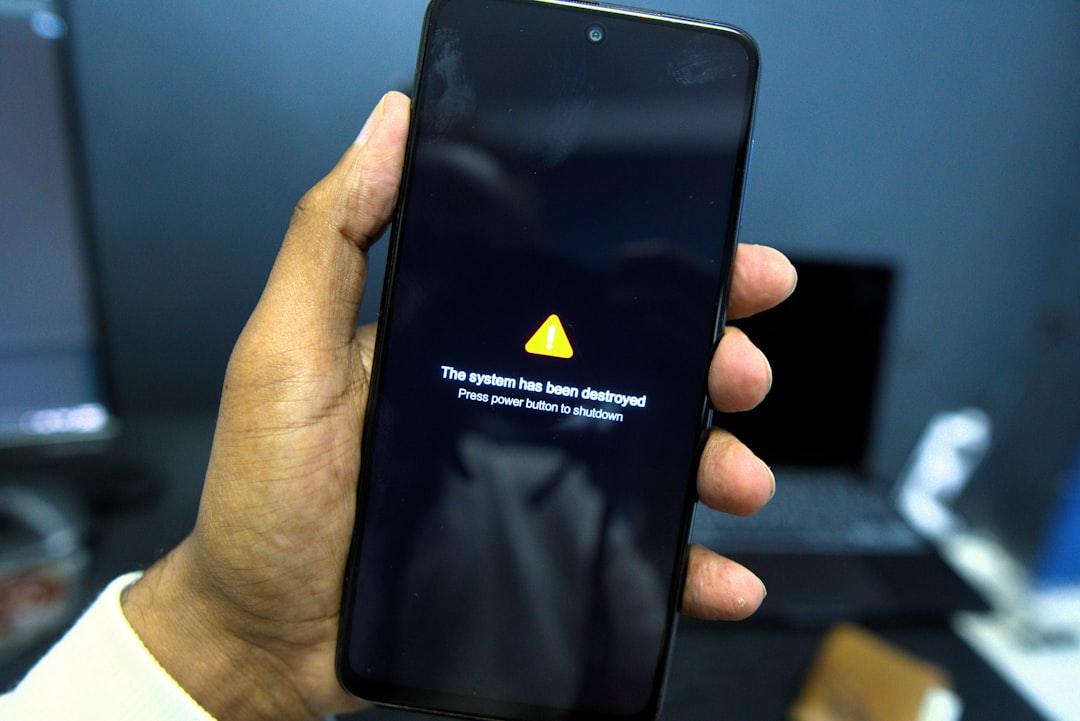
Phone shows a system failure warning message.
Photo: Hamed Taha

How on-device voice message processing works

In the tech world, a notable shift is underway: more and more features that once required sending data to a server now run directly on the smartphone. Fresh official announcements from developers confirm this trend: for processing sensitive information, on-device solutions are now being chosen more often so data never leaves the user's device 21 July 2026. Let's break down what this means for everyday users and why local transcription of voice notes is becoming the privacy standard.

Why local transcription of voice notes has become important now

In the past, turning speech into text almost always meant the smartphone sent the audio file to the cloud. That was necessary for heavy computing. But today, processors are powerful enough that on-device voice message processing is a reality. This is not just a technical trend, but also a response to users' fears about data leaks. Using on-device AI makes it possible to recognize speech without the cloud, keeping every recording private.

How on-device voice message processing works in simple terms

When you press the record button, your phone starts turning sound waves into digital code. In a local setup, this happens under the hood inside the device itself. The assistant app uses built-in algorithms to transcribe the voice note right in the phone's memory. No audio fragments are uploaded to the network. If you use this feature, it is important to understand that the result — the finished text — is stored only in your app or system memory, not on third-party servers.

Local or server-based: what is the difference for the user

The main difference is the path your data takes. With server processing, the audio stream travels over the internet, is analyzed on a remote server farm, and comes back. This offers high accuracy, but it also creates risks. On-device voice message processing removes that middle layer. The benefits are obvious: performance does not depend on internet speed, and the privacy of your thoughts is protected physically. This makes the local method ideal for personal journals and work notes where confidentiality comes first.

When local processing is especially useful: 5 everyday scenarios

Local transcription is indispensable in five cases: 1. Recording personal financial plans. 2. Creating drafts for sensitive work projects. 3. Capturing ideas on a plane or in places with poor reception. 4. Using the device in airplane mode for maximum security. 5. Storing medical recommendations dictated by voice. When you know that voice note recognition on the device stays under your control, you stop worrying about accidental leaks.

Where people make mistakes: 6 risks that do not disappear on their own

Users often fall into the trap of the “illusion of complete protection.” Even if speech is processed locally, remember the following: 1. Your transcriptions may end up in a cloud backup — check sync settings. 2. The lock screen may show text previews — hide them in settings. 3. Third-party apps with keyboard access may read what you type. 4. Outdated OS versions may have vulnerabilities. 5. Shared access to the device (for example, by children) is more dangerous than any cloud upload. 6. Regularly check the list of apps that have permission to use the microphone.

Checklist: how to verify that recognition is happening on the device

To find out whether local processing is working, do three things: turn off the internet (Wi-Fi and mobile data), try dictating a short note in the app, and see whether the transcription appears immediately. If the app keeps working and produces text without a network, then the technology is really using your phone's resources. That is exactly what on-device voice message processing without cloud upload is.

What this changes in communication habits and why PING is looking in this direction too

The growth of on-device AI is changing the culture of digital communication itself. We are getting used to the idea that a gadget can become smarter without becoming more intrusive. At PING, we focus on a clear signal: the user should quickly understand what is happening in a conversation. Integrating such technologies into our lives is a logical step toward keeping communication fast, clear, and, most importantly, staying only between the people involved. This is the right direction for an industry where privacy is becoming a new quality of connection.

Additional context on the topic is provided by the article Communication technologies and on-device data processing: what changes for the user.

Frequently asked questions

What does on-device voice message processing mean?

It means that the entire process of turning your voice into text takes place inside your smartphone's processor, without sending audio files to external servers.

How safe is on-device recognition of voice notes?

Local processing is significantly safer because the data does not leave the device. However, it is always important to know where the final text file is saved and who has access to the phone itself.

How can you tell whether transcription is local or goes through the network?

The simplest way is to turn on airplane mode. If transcription continues to work without internet access, then the processing is being done locally.

Which voice notes are best processed only on the device?

This applies to recordings containing sensitive information: passwords, financial data, personal journals, work plans, or medical notes.

Источники и первоисточники

  1. Android Developers Blog: Build intelligent Android apps: Introduction to...android-developers.googleblog.com

    | 21 July 2026 . We choose an on-device solution so that any privacy -sensitive information on the receipt images never leaves the user's device. The audio diary records, transcribes, and categorizes voice notes into...

Was this article useful?

Your feedback helps make PingBook more precise.

Share this article

Related articles

Следующие истории PingBook

All articles

Why a voice message does not play on a weak internet connection

Is a voice message stuck loading on a poor connection? We explain why it happens, how buffering and the network work, and give you a simple action plan so you can listen without panic or repeat requests.

a cell phone on a stand on a desk
Photo: Muhammad Salim
Why a voice message does not play on a weak internet connection

The situation is familiar: you step into an elevator, ride the subway, or walk into a building with thick walls where your smartphone barely catches a signal. At that moment, an important voice message arrives, but when you try to listen to it, it keeps spinning in a loading state forever. We often immediately think there was an error or the file is damaged, but in reality the problem almost always lies in how data is transmitted when the signal is unstable.

Why voice messages get stuck more often on weak connections while you are on the move

Modern communication has become highly mobile. Voice messages today are not just short “yes” or “no” replies, but long audio notes that we listen to on the go. When you move between base stations, switch from mobile data to Wi-Fi, or simply pass through dead zones, the connection becomes intermittent. With a weak signal in the subway or elevator, the smartphone does not have enough speed to pull data from the network without pauses, so the voice message does not play on weak internet and gets stuck during preloading.

How the app buffers a voice message and why it does not start right away

To let you start listening, the app uses a process called buffering. The app does not wait for the entire file to download to 100 percent, and instead starts playback as soon as the first portion of data is loaded. However, when the internet fluctuates, this data stream is interrupted. If the buffer runs empty and the next chunk of information does not arrive in time because of a poor signal, playback stops. As a result, the voice note will not play until the app restores a stable connection to the server and downloads the missing segment of the file.

Quick diagnosis: 5 reasons a voice note hangs in loading and does not open

If you are facing the problem, try to assess the situation with this checklist. Most often, the reason is one of the following: 1. Unstable network signal: frequent switching between cellular towers. 2. Data saver mode: the phone intentionally limits background downloading of media files. 3. Background processes: other apps may compete for the remaining internet traffic. 4. Power-saving restrictions: the phone system reduces messenger activity to save battery. 5. Caching issues: the app cannot correctly write a temporary file because system resources are limited.

What to do right now if a voice message will not play: a short plan for a weak signal

If you are in an area with poor internet, do not rush to tap the play button dozens of times in panic — that will only increase the number of network requests. First, simply wait 10–15 seconds and give the phone a chance to finish downloading at least part of the file. If that does not help, switch airplane mode on and off to force the connection to refresh. If that does not work, try closing the chat and opening it again to reset the failed buffering attempt. Sometimes a temporary switch to stable Wi-Fi helps if you are near it.

Mistakes that prevent a voice message from fully loading

The main mistake is paying too much attention to the loading indicator. Users often try to “push through” the connection with repeated clicks. This creates a queue of requests that weak internet processes even more slowly. Another common mistake is moving around actively while trying to download. If you entered an elevator and immediately tapped play, the chances of success are minimal: it is better to wait until you are back in a place with a reliable signal.

Checklist: how to listen to an important voice message without asking the other person again

To avoid asking the other person again, follow a simple algorithm: 1. Stop in a place where the signal indicator shows at least two or three bars. 2. Make sure data saver mode is turned off. 3. Wait a couple of seconds after opening the chat: do not tap play immediately, let the interface refresh the status. 4. If the message still does not load, check whether other files are queued — sometimes a large document that started downloading earlier can clog the entire connection.

If the voice message is truly important: how to avoid losing the meaning and asking again unnecessarily

If the information is genuinely valuable, do not rush to draw conclusions from half a sentence. If the connection keeps dropping, it is better to ask the other person to repeat the key points briefly or wait until you are in a stable Wi-Fi area. It is important to stay calm: why a message is sent but not delivered: what to do is a natural process, not personal ignoring. In PING, we focus on a clear signal: the user should quickly understand what is happening in the conversation.

In unstable connection conditions, when it is critically important to get a response quickly, the app architecture plays a key role. PING optimizes data transfer so that even with a weak signal, priority goes to delivering text and key messages, minimizing delays. This approach helps you keep up with the conversation when the internet is unstable and gives you clarity about whether your message reached the recipient.

Frequently asked questions

Why does a voice message not play on a weak internet connection?

Most often the reason is an incomplete file download caused by an intermittent network signal, data saver mode being enabled, or system limits in Android/iOS that prevent the app from downloading media in the background.

What should I do if a voice message keeps loading and does not play?

Stop in a place with a stable signal, turn off data saver mode, and wait 15–20 seconds. If the indicator keeps spinning, restart the chat — this helps the app refresh the connection and start the download again.

How can I listen to a voice message if the internet is weak?

Try not to move around while the file is downloading. If the signal keeps dropping, such as in the subway, it is better to wait until you stop or get back to a stable network before tapping play.

How can I tell that the voice message has finished loading and is ready to play?

When the file has finished loading, the spinning loading icon usually disappears and is replaced by a static Play button. If the button is inactive or keeps resetting to loading, the network is still not stable enough for full playback.

PingBook

Следующие истории PingBook

Why a message is sent later than you wrote it: breaking down the causes of delay

Why is a message sent later than you wrote it? We break down the delay at the phone, network, and application level: what to check, where people make mistakes, and how to calmly return sending to normal.

white and green remote control
Photo: Adem AY

Why is a message sent later than you wrote it? This situation is familiar to many: the text is ready, your finger is hovering over the 'Send' button, but the message is delivered not when you typed it, but minutes or even later. For important correspondence, this is especially unpleasant: you might be answering an urgent question, confirming a meeting, or typing a short 'yes' that dictates the plan for the evening.

The good news is that a delay does not always mean a breakdown. It is more often a combination of the phone, network, and the application itself. Let's break down calmly what is happening and how to understand where the time is being lost.

What happens when you press the 'Send' button

When you send a text, it does not immediately disappear into a void. First, the application accepts the command, then prepares the message for transmission and attempts to send it to the server. Only after this does it go further along the chain and become visible to the recipient. Therefore, the question 'why does the messenger not send messages immediately' is usually not related to a single action, but to a short queue of steps.

If the connection is unstable, the application may attempt to retry the sending multiple times. At this moment, you see the message as if it were stuck. In practice, this is not always an error: sometimes the phone is simply waiting for a more stable communication channel so that the text is not lost.

Why the message sending time does not match the actual time

The most common cause is the network. If the internet 'dips' for a second, the message may have been typed on time but physically sent later. This is where the feeling that the sending time does not match the actual time comes from. This is especially noticeable on the road, in an elevator, in the subway, in areas with overloaded networks, or when switching between Wi-Fi and mobile data.

There are other everyday reasons. Battery-saver mode may limit the application's background activity. A smartphone sometimes pauses data transmission to save power. Another option is system overload: when many applications are open, the device takes longer to process background tasks. In such cases, the delay in sending an outgoing message looks random, although in reality, it has a clear reason.

Sometimes incorrect date and time settings on the phone are to blame. If they are off, confusion may appear in the correspondence timestamps. Therefore, when you see that a message left later than it was written, it is worth checking not only the network but also basic system settings.

Checklist: how to check why messages take a long time to send

If a message was sent with a delay, what should you do first? Without panic, check a simple sequence. First, ensure the internet is actually working: open a website or refresh a page in another application. Then, check if battery-saver mode is enabled. After that, try closing and reopening the application.

Next, it is worth checking if the sending is stuck in the background due to a weak signal. If you were in a room with poor coverage, move to a place with a more stable connection and try again. Another useful step is to restart your phone. This helps when the system keeps an old network session for too long and does not switch to a new one.

This is where people make mistakes most often: they immediately re-type the same text. Because of this, a duplicate or time confusion appears. It is better to wait for a clear status first and only then repeat the sending. If it is an important message, you can briefly check if it went through before writing the next one.

If you are looking for how to check why messages take a long time to send, focus on three signs: is there a connection, is the phone restricting background work, and has the status changed after a restart? Usually, this is enough to understand exactly where the pause occurred.

How we at PING work to ensure a clear signal and a fast response

In such situations, transparency is especially important. When the system honestly shows that a message is still in transit, it is easier for a person not to get nervous and not duplicate the text. At PING, we emphasize a clear signal: the user should quickly understand what is happening in the conversation.

This is why clear delivery and predictable application behavior are more important than grand promises. If a message has been ready for a long time but goes out with a delay, it breaks the rhythm of communication. When the status and the logic of sending are clear, the correspondence becomes calmer: you see where the pause is and do not lose the moment.

In short, a delay is not a cause for alarm, but a signal to check the path of the message: device, network, and background restrictions. And only then draw conclusions. This approach saves time and helps maintain a calm tone in important correspondence.

Additional context on the topic is provided in the article Why chat messages are duplicated after sending.

Frequently asked questions

Why does the message sending time not match the real time when I pressed the button?

Usually because the message did not go through at the moment of pressing the button, but at the moment when the application was able to transmit it to the server. If the connection was unstable, the timestamp may shift.

A message was sent with a delay: what should I do so it doesn't happen again?

Check the internet, battery-saver mode, background application activity, and restart your phone. If necessary, resend the message only after ensuring the first one was not sent.

Why does the messenger not send messages immediately, but after some time?

Most often, weak connection, background activity restrictions, and battery saving interfere. The application may wait for a stable channel, so the text is not sent immediately.

PingBook

Следующие истории PingBook

Communication and On-Device Data Processing: What Changes for the User

A fresh official announcement shows that communication and on-device data processing technologies are increasingly shifting smartphone tasks to the user side. We break down how local processing differs from cloud-based, how it affects privacy, and what to check in new features.

black and silver digital device
Photo: Brett Jordan

Communication and on-device data processing technologies are rapidly shifting from "interesting features" to everyday norms. Not long ago, many functions on a phone depended on a remote server, but now, more tasks are being handled directly on the smartphone. This is not just a technical shift: it changes response speed, privacy, and how we perceive the reliability of our devices.

The reason for this discussion is fresh and confirmed: in the official Android Developers blog on July 21, 2026, the concept of on-device inference was explicitly explained—processing data and requests directly on the device without sending them to a server. The source directly links this approach to user benefits, primarily through local data processing.

For the average user, it looks simple: the phone starts to suggest, recognize, correct, and assist faster, even where connectivity is unstable. But behind the convenience lies an important question: what exactly remains on the device, and what is still sent out?

Why the smartphone is taking on all the work

The main reason is clear: fewer unnecessary delays. When a feature works locally, the device does not need to wait for a response from a remote service every time. This is especially noticeable on the road, in the subway, in the countryside, or wherever the network signal fluctuates. In these moments, on-device data processing technology provides not a "wow" effect, but a very practical peace of mind: you press a button, and the action happens.

Another reason is stability. If a feature is built into the phone itself, it depends less on external outages. If the internet is down, some scenarios remain available. For the user, this is important not in theory, but in the moment: when you need to quickly translate a phrase, find a detail in your notes, or continue a conversation without freezing.

There is a third layer as well—convenience without unnecessary noise. The fewer intermediate steps there are, the less it feels like the device is "thinking somewhere far away." Therefore, why communication technologies are moving to local processing is not a question of fashion, but of practice: it is easier to make features faster and more predictable this way.

Local processing vs. the cloud: what it means for privacy

If you compare the approaches simply, whether on-device data processing or the cloud is better depends on the task. The cloud is convenient when you need high computational power and unified synchronization. Local processing is stronger where response speed and data privacy are paramount.

Why does this affect privacy? Because in a local scenario, some data never leaves the device. This does not make the system "completely closed," but it reduces the number of places where information could be stored and transmitted. For the user, this means fewer reasons to wonder where exactly your voice, text, or image went, and a lower risk of accidentally granting access to sensitive data.

At the same time, it is important not to fall into the trap of a simple conclusion: "local" does not always equal "perfectly secure." Everything depends on the feature's architecture, permissions, updates, and how the developer has divided processing between the phone and external services. Therefore, it is useful to read not the marketing description, but the reality: what exactly is done on the device and what is not.

This is where a new balance emerges. On one hand, the user gains convenience. On the other, they sometimes receive a less visible but more complex system where not everything can be verified at a glance. This means it is important not just to enjoy a "smart" feature, but to understand its boundaries.

How to evaluate the benefits of new features on your device

When a new capability appears, it is useful to ask yourself a few calm questions. Does it work without a network or only with stable internet? Is it clear what data remains on the phone? Can you turn off the feature if you do not need it? Does it behave predictably when the connection is weak, not just in ideal conditions?

This approach helps to see the advantages of local smartphone data processing without excessive enthusiasm or distrust. If a feature speeds up actions, does not break your usual routine, and does not force you to wait for an external response, that is a real plus. If it is complex, drains the battery, or does not offer clear control, the benefit is less obvious.

A typical user error is to evaluate a new technology only by the words "smarter" or "faster." But it is more important to consider whether it becomes clearer what is happening with your data and whether you are less dependent on connection quality. This is where the pros and cons of on-device data processing technology show themselves most honestly: comfort grows, but along with it, the demand for transparency increases.

Therefore, the main conclusion is simple. The trend toward local processing is not about fashion or abstract progress. It is about making digital features closer to the human: working faster, depending less on the network, and behaving predictably. And when communication becomes clearer, the user is more confident in controlling both the device and their data. At PING, we focus on a clear signal: the user should quickly understand what is happening in their correspondence.

Looking at this shift more broadly, it is important for messengers, smart assistants, and everyday services. The more clearly a feature explains itself, the easier it is to trust—without panic and without unnecessary guessing.

Frequently asked questions

Is it safer to process data locally rather than in the cloud?

Local processing does not send data to an external server, so there are fewer unnecessary transmission points. This generally increases privacy, but the result depends on the specific feature and its settings.

Will phone features work if the internet goes out?

Yes, many scenarios can work even without the internet if the feature is truly performed on the device itself. However, some capabilities may still require a connection.

Does local data processing affect application speed?

It depends on the implementation. Often, local processing reduces latency, but it may consume more battery or CPU power if the task is complex.

Источники и первоисточники

  1. Android Developers Blog: Build intelligent Android apps: On-device...android-developers.googleblog.com

    | 21 July 2026 . Building intelligent on-device features refers to the ability to process prompts and data directly on a device without sending data to a server. This offers a few advantages: User data can be...

PingBook

Следующие истории PingBook