Verification codes are not arriving: how to quickly restore access

Verification code not arriving? We explain why this happens, what to check in your phone and connection settings, how to fix a delay, and what to do so you do not lose access to your account.

white printer paper beside silver laptop computer
Photo: Markus Winkler

Verification codes are not arriving: how to quickly restore access

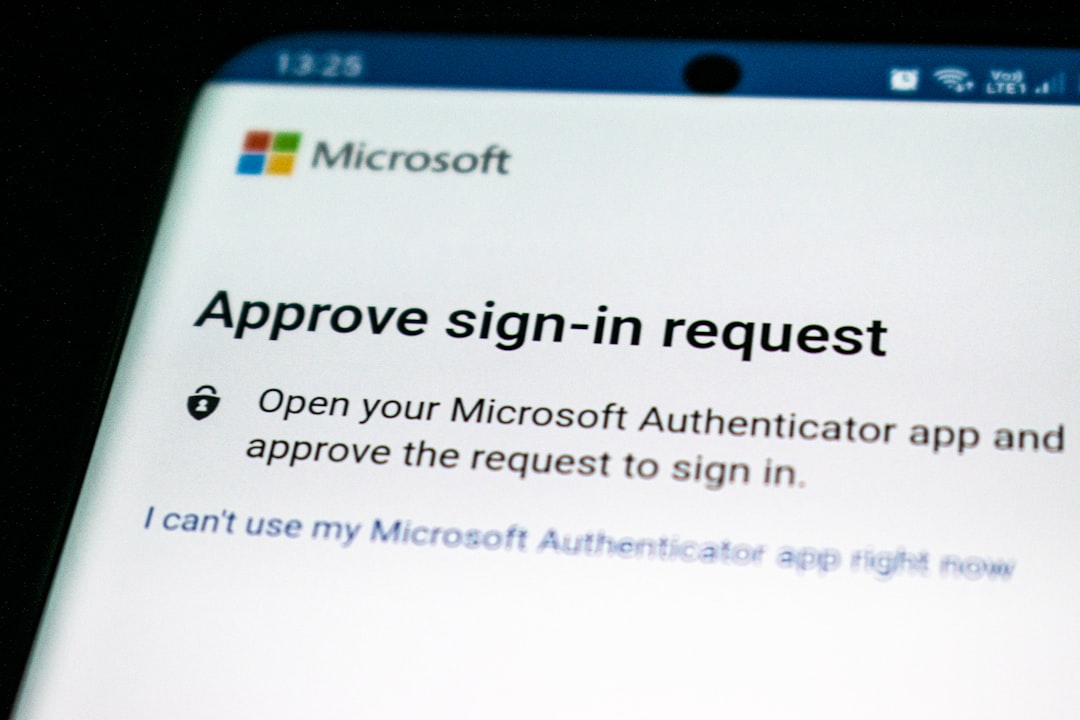
The situation when a verification code does not arrive on your phone is familiar to many. You try to sign in to an account or confirm an action, but there is silence in response. In a world where most services are tied to a phone number, such a delay can be stressful. The main thing is to stay calm, because most often the cause is some simple everyday or technical detail that can be fixed in a couple of minutes.

In short: why a verification code may not arrive

When you ask why verification codes do not arrive in messages, it is important to understand that this is rarely caused by a serious failure. Most often a verification code does not arrive because of connection issues, device settings, or temporary delays on the carrier’s side. To understand what to do if the code does not arrive, it is worth dividing the causes into three groups: network issues, phone settings, and service restrictions.

Why this problem has become especially important now

Today, verification codes are the main line of defense. They provide account security, confirm a sign-in to the service, and verify any critical action confirmation. Since we perform dozens of digital operations a day, waiting for a code has become a bottleneck. It is important to have a clear action plan at hand so you do not waste time guessing.

Scenarios: the code did not arrive, arrived late, or went to the wrong number

Scenarios can differ. Sometimes the code arrives with a delay — unpleasant, but not critical. Sometimes the code does not arrive at all, and then you need to check connection settings. It also happens that the code is sent to the wrong phone number entered during registration. Any message delay can make us nervous, but most problems are solved by simply checking the device status.

3-minute checklist: what to check on your phone and in your account

If you are wondering what to check if the code does not arrive, go through this list:

  • Phone number: make sure you entered it without typos and with the correct country code.
  • Network on the phone: check the signal level, try turning Airplane mode on and off.
  • Power saving: sometimes strict power-saving modes block message delivery in the background.
  • Message blocking: check the Spam folder and the SMS filtering settings.

Where code delivery usually breaks: phone, network, service, or number

SMS delivery problems are usually divided into three levels. First, the mobile carrier may temporarily delay incoming messages from short numbers. Second, phone settings (for example, an unknown-number filter) may hide the message. Third, if a message from a specific service does not arrive, there may have been a temporary failure on its side.

Typical mistakes that keep the code from arriving

The most common sign-in mistake is to request the code again after a couple of seconds. Repeated requests only overload the system and slow delivery down. Another cause is an incorrect phone number or an active message filter that mistakenly sent the message to the archive.

What to do if you need the code urgently

To successfully restore access, give the system some time. If sign-in confirmation did not work, wait 5–10 minutes. Use a backup sign-in method if the service offers one. Remember: account security comes first; never share the code you received with strangers.

If messages arrive late, check similar causes

Often the problem is not the absence of a code, but a general delivery delay. We explained separately why messages arrive late, how delivery statuses are related, and why network issues occur. This will help you better understand how modern messengers work.

PING block: how to avoid missing important messages when you need a quick reply

At PING, we focus on a clear signal: the user should quickly understand what is happening in the conversation. In situations like waiting for an important code or an urgent reply, clear statuses and the absence of extra noise help keep things under control. When you know exactly that a message has been sent and the status is clear, communication becomes predictable.

If notifications arrive without sound, check a separate checklist

Sometimes it seems that the code did not arrive, although the message is already on the phone — it just was not heard. If your notifications arrive without sound, it is worth checking the notification settings and focus modes. This may be the reason you missed an important message sound.

What to do right now: a short 5-step plan

Your short action plan: 1. Check that the entered number is correct. 2. Restart the device. 3. Turn off power-saving modes. 4. Wait 10 minutes before requesting again. 5. If the problem persists, contact the service’s support to restore access.

Frequently asked questions

Why might a verification code not arrive on my phone?

Usually this is related to poor network reception, Airplane mode being on, spam filtering settings on the phone, or temporary overload on the side of the service sending the code.

What should I check first if the code does not arrive?

First, make sure the number is entered correctly, check for network access, restart your phone, and turn off power-saving modes. Do not request the code again too often.

When should I suspect a problem with the number or account?

If the code still does not arrive after 15–20 minutes and several attempts, while messages to other numbers are delivered normally, there may be a failure in the service itself or your number may have been blocked.

What should I do if I need the code urgently but it still has not arrived?

Wait a while, check whether the service is working normally, try another way to receive the code (for example, by call or email), and never share the code with strangers.

Could this be a sign of a hack?

If you receive codes without your involvement or notice strange changes in the account, that is a cause for concern. Change your password immediately and end all active sessions if possible.

Was this article useful?

Your feedback helps make PingBook more precise.

Share this article

Related articles

Следующие истории PingBook

All articles

How not to miss an important message in a work chat: a priority control system

Why important messages get lost in a work chat and how to stop reading everything. A simple priority system, team rules, and a checklist to quickly find tasks without panic.

black android smartphone on a white table
Photo: Homescreenify

How not to miss an important message in a work chat, when there are already a hundred new lines in the correspondence, is a question of system, not willpower. One person writes about a meeting, another sends a file, a third responds to yesterday's question, and an important task drowns among “ok” and random clarifications. In such a feed, the problem is almost always the same: we try to read everything, when in reality we need to quickly find the important information.

This is relevant now because work communication increasingly lives in a single stream. The chat has simultaneously become a bulletin board, a task manager, a file repository, and a place for urgent questions. If order is not established, the brain starts working in a constant state of alert: what if something is missed, what if a response was already requested, what if the deadline passed. This leads to fatigue, unnecessary checks, and the feeling that work never ends, even after you log off.

Why we lose important information in the work stream

Information noise in correspondence usually appears not because of a “bad chat,” but because of the team's habits. Tasks, jokes, approvals, and file discussions are all mixed in one place. Messages come without a topic, responses jump between questions, and urgent matters look the same as casual comments. As a result, important information does not stand out visually or psychologically.

People most often make mistakes in three areas. First, hoping that “I will reread everything later in the evening.” Second, writing a long message without one clear call to action. Third, believing that if notifications are on, the message will certainly not be lost. In practice, a notification only attracts attention, but does not help you understand what to do next.

Work chat rules: how to structure the chaos

To understand how to structure correspondence in a work chat, start not with the phone, but with team rules. They are simple, but they are exactly what cuts through the noise.

  • One topic — one message or one thread. Do not mix a deadline question, a file link, and a request to confirm participation in one paragraph.
  • Essence first, details later. At the beginning, write what is needed: approve, check, reply, send.
  • Mark urgent matters separately. Do not abuse this, but if a task is truly urgent, it should be visible immediately.
  • Pin files and decisions. Information that affects today's work should not need to be searched for in the feed.
  • Do not reply “inside the whole chat” if the question is specific. The fewer extra responses over an important message, the easier it is to search later.

Such work chat rules for employees do not make communication dry. They simply help to separate the work signal from background noise. And this saves time for everyone: both the one who writes and the one looking for an answer.

Checklist: how to quickly find important tasks in a messenger

If you find yourself thinking “where was that?” every day, you need a personal system. It doesn’t have to be complex.

  1. Check pinned messages first. Links, deadlines, and rules are often kept there.
  2. Look at the sender and the topic. Not everything requires immediate reading, even if it arrived at the same time.
  3. Search by keywords. Project name, date, client name, task number — this is faster than scrolling through everything manually.
  4. Mark important items immediately. If there is an option to save a message or flag it, do it while reading.
  5. Clear out noise on a schedule. You don't have to live in the chat. Sometimes two short checks a day and a separate window for deep work are enough.

This way, how to quickly find important tasks in a messenger becomes not a question of memory, but a question of habit. You stop monitoring the stream and start managing it.

Another useful technique is to agree on a message format. For example: action first, then explanation. Then a phrase like “Need to approve the layout by 3:00 PM” reads faster than a long introduction. At PING, we emphasize a clear signal: the user should quickly understand what is happening in the correspondence. This is not about “making it look pretty,” but about ensuring important items do not get lost in the stream.

Clear signal — fast response: how to simplify work communication

When a team writes clearly, there are fewer missed items without extra effort. A person sees where the task is, where the discussion is, and where the background noise is. This is the transition from a “read everything” mode to a “find the main point” mode. It reduces anxiety and frees up time: there is no need to check the chat every hour just in case.

To summarize, a work chat should not be a place where you are constantly catching up with events. It should help you quickly understand the priority. For this, three things are enough: clear rules, short messages, and the habit of marking important items immediately.

FAQ

Why do I constantly miss important messages, even when notifications are on?
The problem is often not in the notifications, but in the lack of structure in the chat. When urgent matters are mixed with background noise, the important items do not stand out.

How to structure correspondence in a work chat so I don't spend hours searching for a task?
Use one topic per message, pin important items, and search by keywords. If there are threads or separate discussions, don't mix everything into one feed.

What work chat rules for employees help maintain order?
The main rule is to write with purpose and separate topics. It also helps to have an agreement: mark urgent matters separately, and pin decisions and files.

Frequently asked questions

Why do I constantly miss important messages, even when notifications are on?

The problem is often not in the notifications, but in the lack of structure in the chat. When urgent matters are mixed with background noise, the important items do not stand out.

How to structure correspondence in a work chat so I don't spend hours searching for a task?

Use one topic per message, pin important items, and search by keywords. If there are threads or separate discussions, don't mix everything into one feed.

What work chat rules for employees help maintain order?

The main rule is to write with purpose and separate topics. It also helps to have an agreement: mark urgent matters separately, and pin decisions and files.

PingBook

Следующие истории PingBook

Why does the text message send, but the picture does not?

Why does text go through while a photo gets stuck? We break down the causes of media sending failures, how weak connectivity affects uploads, and what to check so a file gets through the first time.

black Samsung Android smartphone on a white surface
Photo: Cedrik Wesche
Why does the text message send, but the picture does not?

It’s a familiar situation: you try to send a friend a photo on the road or from a café, the text flies through instantly, and the picture stubbornly spins or just sits there. It seems like the internet is working, but media files — photos, videos, documents — seem to live their own life and refuse to reach the recipient. In this article, we’ll break down why this contrast happens, what actually gets in the way of media sending, and how to avoid wasting nerves on endless resend attempts.

In short: why text goes through faster than a picture

The main reason is data size. A text message weighs only a few bytes — a tiny signal that can slip through even the weakest connection. A picture, on the other hand, is a data package measured in hundreds of kilobytes or even megabytes. On an unstable network, it’s easier for the app to “push through” text, while media transfer needs a stable and stronger connection. If the connection keeps dropping, the app manages to send the text, but fails when uploading the heavy file.

Why this has become more common now

Modern smartphones take high-resolution photos that are large in size. At the same time, we increasingly use mobile internet in places with poor coverage: on the subway, in elevators, or on highways. In addition, power-saving systems have become stricter about limiting background data transfer to extend battery life. As a result, even if the phone shows network availability, it may be too weak or overloaded for media upload.

Where sending breaks: 5 common causes
  • Unstable internet: Switching between cell towers or moving from Wi‑Fi to mobile data causes a brief connection drop, which is critical for large files.
  • Data saver mode: If background data restrictions are enabled, the app gets blocked when trying to send a photo while minimized.
  • File size: Trying to send an original 10 MB photo on a weak signal is almost always doomed to stall.
  • Storage or cache overflow: When the device’s internal storage is packed full, the app has no room for temporary media processing before sending.
  • Notification service failures: Sometimes the issue is caused by a stuck synchronization process inside the app itself.
Scenarios: when text goes through but media stalls

You may notice that text sends while the photo hangs in these situations: while riding a train or subway, where the network keeps dropping; when switching between city Wi‑Fi networks; or when you send one file and immediately start uploading another without waiting for the first to finish.

Checklist: what to check before sending again

To avoid repeated failed attempts and battery drain, do this:

  1. Check whether the app has permission to work in the background.
  2. Make sure the network indicator is stable (at least 2–3 bars).
  3. Try switching from Wi‑Fi to mobile data or vice versa.
  4. Learn more in our article about why a message gets stuck while sending in a chat: what to check in the network and phone.
How to send a photo or file with less risk of failure

Don’t tap “retry” repeatedly — it only creates a queue of stuck tasks. The best approach is: 1. Open the app full screen and wait for it to sync. 2. If the file is very large, try sending it a bit later when the signal is stronger. 3. Turn off power-saving mode for a minute. 4. Make sure the app itself is not frozen.

Typical mistakes that keep media from sending

The most common mistake is panic. The user starts tapping the send button chaotically, which makes the app try to process five identical files at once. Another common mistake is trying to resend media when the battery is critically low, and the system deliberately throttles all network requests.

PING block: how to make media sending calmer

In PING, we focus on a clear signal: the user should quickly understand what is happening in the conversation. Instead of an endless spinning indicator, our app makes it clear at which stage the data transfer is. This helps you avoid guessing whether the photo went through or whether there is a delay because of the network.

What to do right now

If the photo is “stuck,” close the app, wait 10 seconds, and open it again without repeatedly tapping. If the problem keeps happening, learn the main reasons in the article why a photo is not sending in a message: the main causes. Understanding the status will help you wait for the send calmly, without wasting time on unnecessary actions.

Frequently asked questions

Why does the text send, but the picture does not?

A text message uses very little data, so it goes through even on a weak signal. A picture is much larger and needs a stable connection to upload.

What should I check first if a photo won’t send?

Check the stability of the internet connection, the file size, whether background data transfer is restricted, and whether power saving is enabled.

How can I send a photo quickly on a weak network?

Do not send the file several times in a row. Wait for a stable network, switch between mobile data and Wi‑Fi if needed, or remove power-saving limits.

Why does the picture keep spinning and not attach?

This happens because the media file is queued for sending, but due to weak internet or traffic-saving settings, the app cannot push it through the network.

PingBook

Следующие истории PingBook

AI-First Technology and Cloud Computing: What Has Actually Changed for Users

The official AI-First Colab announcement is important not only for developers: it demonstrates how cloud tools are learning to maintain context and simplify long-running tasks. We break down what is confirmed, where caution is appropriate, and what to check in your account without panic.

a screenshot of a phone
Photo: Ed Hardie

Using the query site developers googleblog com 2026 communication privacy security, it is easy to find the latest official announcement, but its meaning for the average user is not always obvious. This is not about "AI magic for the sake of AI," but about how a cloud-based tool for working with code and data becomes faster, more flexible, and more convenient for long-running tasks. Google's official post about the fully reimagined AI-First Colab is published here: developers.googleblog.com.

It is important to separate fact from conclusion. Fact: Google is announcing a new AI-First approach in Colab. Conclusion: Such changes usually make working with large, long-running tasks more manageable, but they do not eliminate basic rules of privacy, access, and careful data handling.

Context is king: How AI agents change data workflows

The main idea behind such updates is not to force the user to write more, but to help them avoid losing context. When a task spans hours or is broken into several steps, a system that remembers where you left off, what you have already verified, and what needs to be done next is highly valued. This is the practical meaning of long-running AI agents in simple terms: they do not "think for you," but they maintain the thread of your work.

For the user, this is important for a very practical reason. People often abandon complex tasks midway because they have to recall logic from scratch, search for previous results, and check what has already broken. The benefits of using new technologies for tasks are evident here: less manual routine, less lost time, and fewer errors due to haste.

However, there is a common mistake: expecting an AI tool to do the work "without instructions." In practice, it is only useful when the task is clearly described and data is structured. Otherwise, acceleration turns into confusion.

Privacy and security in the era of cloud computing

Any cloud service raises the same question: where is the data, and who has access to it? This is a valid question, not a sign of distrust in the technology. To put it simply, the security of cloud resource access generally relies on three things: your account, access permissions, and the habit of not uploading unnecessary information.

What you should check right now: is two-factor authentication enabled, are there any extra devices in the login list, are there any public links to old projects still open, and have any unnecessary files reached the cloud? How can you protect your data when using new features? First, restrict access, then share only what is truly required for work.

It is useful not to confuse different risk levels here. Professional cloud tools and personal communication are different scenarios. It is one thing to grant access to a work project; it is another to discuss personal matters in a chat. For chats, separate habits are important: checking who can see a message, how notifications are configured, and whether sensitive data is being forwarded out of habit.

The official announcement does not mean you urgently need to change all your settings. But it is a good reason to review basic account hygiene and avoid storing unnecessary files where they don't belong.

When complexity requires a clear signal

The most common problem with new technologies is not the complexity itself, but the explanation surrounding it. If someone hears many clever words but does not understand what has changed for them, unnecessary anxiety arises. Therefore, when discussing such news, clear communication in a messenger is especially valued: keep it short, to the point, without hints, and without overloading the recipient.

How do you discuss technology without confusion? It is better to stick to this format: what was released, why it is needed, what is already confirmed, and what is currently just a probable effect. This format saves time and reduces the risk of incorrect conclusions. At PING, we emphasize a clear signal: the user should quickly understand what is happening in the conversation. This is useful not only in personal communication but also when sharing news about complex products with colleagues, friends, or in a work chat.

In short: the news about AI-First Colab is important not because "everything has become smarter," but because cloud tools are increasingly taking on the burden of maintaining context and handling long technical routine steps. For the user, this means fewer unnecessary actions and more control—but only if the user themselves does not forget about access, data, and clear communication.

Security checklist for cloud account owners
  • Check if two-factor authentication is enabled.
  • Review active sessions and remove unnecessary devices.
  • Restrict access to projects and folders based on the "need to know" principle.
  • Do not store files in the cloud that are not necessary for work.
  • Review public links and access permissions every few months.
  • If sharing results in a chat, specify exactly what is important and what needs to be done next.

Such a checklist does not make life more complicated. On the contrary, it restores a sense of control. This is the main takeaway from the recent announcement: useful technology does not replace caution, but works well only when combined with it.

FAQ

How does the AI-First update in Google Colab affect the security of my personal correspondence?
It has no direct effect. This update concerns the cloud environment for working with data and tasks, not the rules or privacy of personal chats.

What are long-running AI agents and why have they become relevant in 2026?
This is an approach where the tool preserves the context of a long task and can continue working after a pause. The relevance has grown due to larger projects and the need to spend less time on repeated explanations.

Do I need to change my privacy settings after the announcement of new AI features from Google?
Not automatically. However, it is worth checking your access permissions, active sessions, and what data you are storing in the cloud in general.

Reading tech news is easier with PING, if you need a fast and clear exchange without extra noise.

Frequently asked questions

How does the AI-First update in Google Colab affect the security of my personal correspondence?

It has no direct effect. This update concerns the cloud environment for working with data and tasks, not the rules or privacy of personal chats.

What are long-running AI agents and why have they become relevant in 2026?

This is an approach where the tool preserves the context of a long task and can continue working after a pause. The relevance has grown due to larger projects and the need to spend less time on repeated explanations.

Do I need to change my privacy settings after the announcement of new AI features from Google?

Not automatically. However, it is worth checking your access permissions, active sessions, and what data you are storing in the cloud in general.

Источники и первоисточники

  1. Fully Reimagined: AI-First Google Colab - Google Developers Blogdevelopers.googleblog.com
PingBook

Следующие истории PingBook