Why Notifications Are Not Coming to iPhone: Main Reasons

If notifications are not coming to iPhone, the cause is most often in settings, Focus mode, power saving, or the app’s background activity. We explain what to check first and how to fix the problem quickly.
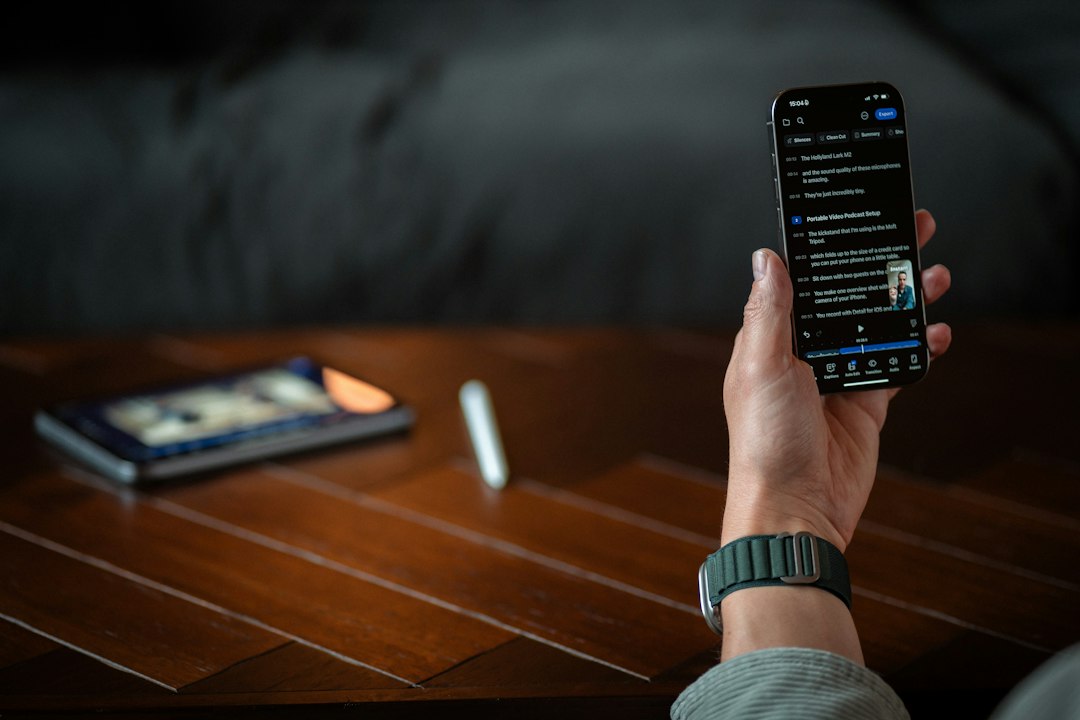
person holding black android smartphone
Photo: Jonas Leupe

If why notifications are not coming to iPhone is your current question, start simple: the problem is not always in the app itself. Sometimes the message has already been delivered, but the phone does not show it right away because of settings, Focus mode, power saving, or background limits. The good news is that you can usually find the cause in a few minutes.

Below is a clear breakdown without unnecessary theory: what to check first, why notifications may not arrive even when the internet is on, where the delay comes from, and how to fix everything quickly.

What to check first if notifications are not coming to iPhone

When the question why a notification is not coming to iPhone comes up, it is important to first understand whether this is a delivery failure or just a display delay. Open the conversation, refresh the screen, and check whether the message arrived without a pop-up notification. If the text is already in the chat but no alert appeared, the issue is most often in the phone settings.

If the message does not appear at all, check the network and the app’s operation. Sometimes a notification is “lost” not at the sending stage, but because the phone cannot temporarily receive data in the background. So first separate the two situations: the message arrived, but without a signal, or it did not arrive at all.

Main reasons notifications do not come to an iPhone

The most common reasons are straightforward and usually easy to spot. First, notification permissions may be turned off. Second, Focus mode may be enabled and hiding some alerts. Third, the phone may be in silent mode while notifications are set to sound or banners only.

Another common reason is power saving. When it is active, the system may limit the app’s background activity, and why notifications are not coming to iPhone becomes a very natural question. Background content refresh restrictions can also interfere: if the app cannot regularly check for new events, notifications are delayed or do not appear right away.

Do not forget to check the app’s own settings. Sometimes banners, sounds, or badge icons are disabled there. Then the message arrives, but is almost invisible.

Why notifications do not arrive when the internet is on

The situation where the internet works but notifications do not arrive when the internet is on is common. This means the problem is not the network itself, but how the app works in the background. The phone can be online, yet still limit background activity, especially if power saving or a weak connection mode is enabled.

If you notice why push notifications are not coming to the phone even with a good connection, check whether the device is switching between Wi‑Fi and mobile data, whether data saver mode is on, and whether background refresh is restricted. Sometimes a simple network restart helps: turn airplane mode on and off, then check delivery again.

Notifications arrive only when I open the app: what it means

If notifications arrive only when I open the app, this is almost always a sign that background delivery is disabled or unstable. The app receives new data only when it launches, and the phone does not let it actively check for updates the rest of the time.

Most often the cause is background activity limits, power saving, or the fact that the system has not refreshed the app in the background for a long time. In this case, messages pile up and appear only after you open the app. That is frustrating because it creates the feeling that everything is working, but important items arrive too late.

Why a message arrives late on the phone

When you notice why a message arrives late on the phone, it is usually not a lost message, but a delay in push delivery. This can happen because of a weak network signal, Focus restrictions, power saving, or unstable app behavior after an update.

Push notification delays on a phone can also appear if the system is overloaded, storage is nearly full, or the app has not been updated for a long time. Sometimes a simple routine helps: close the app, restart the phone, disable saving modes, and check whether notifications start arriving faster.

How to fix it if notifications are not coming to iPhone

Here is a step-by-step sequence that usually helps the fastest:

  1. Open notification settings and make sure permissions are enabled.
  2. Check Focus modes and whether they are hiding messages.
  3. Make sure the app is not restricted in the background and can refresh.
  4. Turn off power saving and see whether it is affecting delivery.
  5. Restart the app and the phone itself.
  6. Check for system and app updates.
  7. See whether the message appears on the lock screen and in Notification Center.

If after that why notifications are not coming to iPhone is still a problem, delete and reinstall the app, then allow notifications again. This often resets minor errors that build up over time. It is also useful to check the device date and time: if synchronization fails, some services work worse.

How to make replies and notifications more noticeable in everyday communication

When important messages need to arrive without unnecessary delay, it is not only the phone settings that matter, but also the communication logic itself. The clearer the signal, the easier it is for a person to notice it in time and reply quickly. In Ping, we focus on a clear signal: the user should quickly understand what is happening in the conversation. This approach helps avoid losing important information among dozens of unnecessary alerts and supports a fast reply where it is truly needed.

If you often miss messages, it helps not only to set up the phone, but also to choose a service where notifications and the communication flow itself are organized clearly. This is especially important for work, family, or urgent matters: less noise, more clarity, fewer chances to miss something important.

What to do next

In short: first check notification settings, then Focus and power saving, then background restrictions and the network. In most cases, that is enough to understand why notifications are not coming to the phone and restore normal message delivery without extra steps.

Frequently asked questions

Why are notifications not coming to iPhone?

Most often it is due to notification settings, Focus mode, power saving, background app activity, or a temporary network issue.

Why do notifications arrive only when I open the app?

This usually means background refresh is disabled or restricted, so new messages appear only after the app is launched.

Why do notifications not come when the internet is on?

The internet may work, but background delivery can be limited by phone settings, power-saving mode, or the notification system itself.

Why does a message arrive late on the phone?

Delays are often related to a weak network, power saving, background restrictions, or a temporary app issue.

Was this article useful?

Your feedback helps make PingBook more precise.

Share this article

Related articles

Следующие истории PingBook

All articles

How to set a password for your chats

We break down how to set a password for your chats in practice: what the phone protects, what the app protects, how to hide messages from outside access, and how to check whether someone else is reading your account.

Black iPhone 5 beside brown-framed eyeglasses and a black iPhone 5
Photo: Dan Nelson
How to set a password for your chats

If you are looking for how to set a password for your chats, the important answer is this: most often, you do not put a password on the chat itself, but on the phone, the app, or separate access features. That is the fastest way to protect messages from prying eyes.

It is best to start simple: check the screen lock, enable a passcode or biometrics, and then review the privacy settings in your messaging app. This will immediately reduce the risk of accidental access and help you understand where protection can be strengthened.

What exactly can be protected with a password in chats

In practice, the question how to set a password for your chats usually means not one step, but several layers of protection. It is important to understand the difference:

  • Phone — the main sign-in screen. If it is protected, it is already harder for someone else to open your messages.
  • App — sometimes there is a separate code, biometrics, or hidden chats inside.
  • Notifications — even without opening the app, they may show part of the text on the lock screen.
  • Account — if someone gets access to the account, they may read the history from another device.

That is why the right approach is not to look for one “magic password,” but to build several simple barriers. This is especially useful if you are thinking about how to limit access to messages on your phone without complicated settings.

How to limit access to messages on your phone

The most reliable and straightforward scenario is to lock access at the device level. For an everyday user, that is often enough.

  1. Set a passcode, PIN, or biometrics to unlock the screen.
  2. Enable auto-lock so the phone does not stay open unattended.
  3. Hide notification content on the lock screen if messages should not be visible right away.
  4. Check app access: sometimes it can be protected with a separate code or fingerprint.
  5. Turn off message previews in notifications if there are people nearby.

If the task is how to protect chats from unauthorized access, start with these steps. They do not require special knowledge, but they noticeably reduce the risk. Another useful habit is not leaving the phone unlocked even “for a minute”: in everyday life, those minutes are often the problem.

How to set up chat privacy in a messaging app

Once the screen is protected, move on to the settings inside the app. Here you can usually reduce the amount of extra information other people can see.

Look for these items:

  • Who can see your phone number — it is useful to limit visibility for strangers.
  • Profile photo — sometimes it is better to make it visible only to contacts.
  • Status and last seen time — these can often be hidden too.
  • Sign-in confirmations — turn them on if the app supports them.
  • Notifications — set them so message text is not shown in full.

If you are wondering how to set up chat privacy in a messaging app, follow one principle: the less unnecessary information is visible from the outside, the more comfortably you can use messages. This does not replace phone locking, but it complements it well.

How to tell whether an account was hacked and chats are being read

Sometimes the problem is not that someone saw the phone screen, but that the account itself was accessed. Pay attention if you notice:

  • unknown devices in the list of active sessions;
  • messages you did not send;
  • login notifications that seem unusual;
  • changes to settings you did not make;
  • a sudden disappearance of old sessions or warnings about a new login.

If you are concerned about how to tell whether an account was hacked and chats are being read, check active sign-ins and immediately end all unnecessary sessions. After that, change the password if one is used, and turn access protection back on. The key point: the sooner you notice the problem, the less chance someone has to read important messages.

It is also helpful to remember who can read my messages and how to check it: usually the risk is tied either to an unlocked device, someone else’s access to the account, or notifications visible on the screen.

Why the wrong person might see a message

Often the cause is not a “hack,” but simple carelessness. Here are the most common situations:

  • Shared phone — if several people use it, a chat may be opened by accident.
  • Weak passcode — a simple password is quickly guessed by people who know you.
  • Open notifications — message text is visible to anyone nearby.
  • Forgotten sessions — you signed in from another device and did not log out.
  • Screen wake — the phone unlocked while you were distracted.

If you want to understand why the wrong person might see a message, start with these everyday causes. In most cases, they explain the problem best. And that means it can also be fixed quickly: update the passcode, close extra devices, hide message previews, and check privacy settings.

How to make chat protection simpler in Ping

When there are many settings, it is easy to forget what is already enabled and what is not. That is why it is more convenient when protection is built around clear steps and does not require remembering details every time. In Ping, we focus on a clear signal: the user should quickly understand what is happening in the chat.

This is also useful for protection: if you can see where access is open, which actions have already been completed, and what needs attention, it is easier to stay organized without unnecessary hassle. This approach is especially helpful when you want not just to set a password once, but to really protect chats every day and keep access to messages under control.

Check your privacy settings and turn on chat protection — start with screen locking, then limit notifications and review which access options are available in the app.

Frequently asked questions

Can you set a password specifically for a chat?

Usually you do not protect the chat itself, but access to the phone, account, and app. That is why you need a passcode, biometrics, or a separate lock inside the app.

How can you tell whether an account was hacked and chats are being read?

Check active sessions, unknown devices, unusual notifications, and messages you did not send.

Who can read my messages and how can I check it?

First lock the phone with a passcode or biometrics, then check app access, notifications, and extra sessions.

How do you limit access to messages on your phone?

Set a passcode or biometrics for the screen, enable auto-lock, hide message previews, and check the app’s protection settings.

How do you set up chat privacy in a messaging app?

Review the settings for number visibility, profile photo, status, notifications, and account sign-ins. The less unnecessary information is visible, the better.

PingBook

Следующие истории PingBook

How to sign out of your account on all devices

Step-by-step instructions on how to sign out of your account on all devices: when you need it, how to check active sessions, what to do afterward, and how to strengthen protection.

person holding black iphone 4
Photo: Maxim Ilyahov
How to sign out of your account on all devices

If you want to sign out of your account on all devices, it usually means one thing: you need to quickly cut off access from an old phone, someone else’s computer, or any device where sign-in was saved. This is useful if you lost your smartphone, forgot to sign out on someone else’s device, or noticed unusual activity.

Below is a simple process that works for almost any service with a personal account, messages, or cloud access.

In brief

Here is the fastest answer to the request how to sign out of your account on all devices:

  1. Open security or privacy settings.
  2. Find the list of active sessions, devices, or sign-ins.
  3. End all sessions except the current one, or use sign out everywhere right away.
  4. Then change your password and check additional sign-in methods.

If you want the shortest scenario, it is this: open settings, find active devices, end the sign-ins, and strengthen protection. That is the basic answer to the question how to sign out of an account on all devices.

When to sign out of all devices

This kind of sign-out is not only for breaches. Often it simply helps clean things up and remove old connections.

  • Lost phone. If the device is gone, it is best to cut off access immediately.
  • Someone else’s computer. You may have logged in at work, at a friend’s place, or in a service center and forgotten to sign out.
  • Suspicious activity. If you notice strange notifications, new sign-ins, or unclear actions, check security.
  • Shared access. If several people used the device, it is better to end old sessions.

Sometimes a person does not notice a problem right away. But if the question arises how to tell whether someone else logged into the account, you should act without delay. The faster you close extra sign-ins, the lower the risk that someone will read personal messages or change settings.

In practice, warning signs are not only a password change you did not make. They also include unexpected sign-in emails, unknown devices in the session list, missing notifications, or messages you did not open.

How to check active sessions and sign out on all devices

The general principle is almost the same everywhere, even if the section names differ.

  1. Open account settings.
  2. Go to security, privacy, or devices.
  3. Find the block with active sessions, sign-ins, or connected devices.
  4. Review where and when the sign-in happened.
  5. End any sessions you do not need.
  6. If there is a button like “sign out everywhere” or “end all sessions,” use it.

If you need to understand how to check active sessions in an account, look for the meaning of the section, not the app name. Usually it is a list of devices, cities, browsers, or last sign-in dates. After all sessions are ended, old devices will no longer have access to the account.

Important: if you sign out not only from one device but from all devices at once, the current session may also end. That is normal. Just make sure you remember your password and can sign in again.

How to tell whether the account may have been opened without you

Someone else’s sign-in is not always obvious right away. But there are signs that help you react in time.

  • You receive a sign-in alert that you did not trigger.
  • Unknown entries appear in the device list.
  • Read messages appear that you did not open.
  • Settings change even though you did not touch them.
  • The password suddenly stops working.

If you are wondering how to tell whether someone else logged into the account, start by checking sessions and sign-in history. Then change your password and end all connections. If the service shows sign-in times, compare them with your schedule: often the unauthorized access becomes obvious immediately.

When there is a risk that someone may have opened your profile, it is important not only to close access but also to understand how to protect your conversations from unauthorized access. For that, you need additional security measures, not just a one-time sign-out from all devices.

What to do after signing out of all devices

Signing out is a good start, but not the final step. To protect the account long term, take a few more actions.

  1. Change your password. Especially if it may have been saved on someone else’s device.
  2. Check your email and phone number. Make sure they are yours and accessible only to you.
  3. Turn on two-factor protection. Then sign-in will require an additional code or another method.
  4. Check backup codes. If they exist, store them in a safe place.

If you are asking how to enable two-factor authentication for an account, look for the security section and the additional sign-in confirmation setting. It is useful even when there has been no breach: an extra barrier always works in your favor.

What is two-factor authentication and why is it needed? It is a sign-in method where a password alone is not enough. In addition, another step is required: a code, confirmation, or another second factor. Even if someone learns the password, access will still be blocked without the extra confirmation.

After all these steps, check whether any old devices remain in the service memory. It can also be useful to update the password for your email if it can be used to recover account access.

How it works in PING

In PING, we focus on a clear signal: the user should quickly understand what is happening in the conversation. This is important not only for messages, but also for controlling account access. When sign-ins and notifications are easy to understand, it is easier to notice something extra and close access in time.

This approach helps you stay connected to important contacts while keeping the account under control. If something looks suspicious, the person immediately sees where to check sessions, what to change, and how to restore security quickly. That is how convenient communication supports peace of mind: fewer guesses, more clear actions.

In the end, the most reliable scenario is simple: check sign-ins, end extra sessions, change the password, and turn on additional protection.

Check your account and close extra sessions

If you have even the slightest doubt, do not delay the check. Open settings, review active devices, and end all unnecessary sign-ins. This will quickly restore control over the account and reduce the risk of unauthorized access.

Frequently asked questions

How do I check active sessions in an account?

Open security or device settings and find the sign-in list. It usually shows where the account is open now and lets you end extra sessions.

What should I do if someone else logged into the account?

Change your password immediately, end all active sessions, and turn on additional protection if it is available.

What happens if I sign out of my account on all devices?

All old sign-ins will end, and you will need to sign in again on each device. That is normal and necessary for security.

How do I enable two-factor authentication for an account?

Go to security settings and find the additional sign-in confirmation section. After enabling it, sign-in will be protected more strongly than with a password alone.

How do I protect conversations from unauthorized access?

End extra sessions, change your password, enable two-factor protection, and watch for unusual sign-ins. This is a basic set that really works.

PingBook

Следующие истории PingBook

How to Set a Password for Messages

Step by step, we explain how to set a password for messages on Android and iPhone when there is no separate button, and which settings actually help protect conversations.

person holding black android smartphone
Photo: Jonas Leupe

How to set a password for messages is a question that usually comes up not from curiosity, but from a simple concern for privacy. The good news: in most cases, you can protect not just one message, but an entire chat, app, or phone screen. That is the most reliable way to keep conversations private without unnecessary hassle.

In short: a separate message is rarely protected by a password. More often, people set up app locking, PIN or biometric access, and hide notification content. This gives you better control over who can see what on the screen.

What can be protected with a password in chats

When people talk about protecting conversations, they usually mean not a single message, but one of three levels of protection:

  • the entire phone — a passcode, fingerprint, Face ID, or another unlock method;
  • a chat app — a separate password or biometrics for entry;
  • notification content — hiding message text on the lock screen.

This helps create proper privacy for conversations: even if your phone ends up in someone else’s hands, chats will not open immediately. If you are looking for how to make conversations private, start with these settings.

How to set a password for messages on Android

On Android, the path depends on the phone model and interface, but the logic is usually the same:

  1. Open the phone settings.
  2. Find security, privacy, or app protection.
  3. Enable locking for the required app with a PIN, password, or fingerprint.
  4. Check whether you can hide notification content on the lock screen.
  5. If there is a chat-hiding feature, turn it on for the needed conversations.

If you are searching for how to set a password for messages on Android, remember: sometimes there is no separate button specifically for messages. In that case, locking the app itself and the phone screen helps. That already greatly improves protection from others.

Another useful step is to disable message text previews in notifications. Then on the lock screen, only the sender’s name or just the fact that a new message arrived will be visible.

How to set a password for messages on iPhone

On iPhone, protection is also based on access to the device and apps:

  1. Open Settings and check whether a passcode is enabled.
  2. Make sure Face ID or another biometric method is set up.
  3. Go to notification settings and limit previews on the lock screen.
  4. Check whether you can add extra protection to the app itself, if it supports that.
  5. Look at Screen Time settings if you need to restrict access to conversations further.

If you need to understand how to set a password for messages on iPhone, most often this means a passcode, Face ID, and hiding notification text. It is a simple and effective set of tools that helps keep conversations out of sight.

How to limit access to chats on a phone if there is no separate password

Sometimes there is no separate feature, and then you can build protection from a few simple steps. This is especially useful if you want to quickly understand how to limit access to chats on a phone without extra setup.

  • Set a strong screen lock. It is better not to use a too-simple code.
  • Hide notification previews. This keeps other people from seeing message text on the lock screen.
  • Enable biometrics. A fingerprint or Face ID is more convenient and safer than a simple password.
  • Sign out on someone else’s device if the login was saved.
  • Check autofill and saved sessions. Sometimes they are what create extra access.

If you are wondering how to protect conversations from others, it helps to look not only at the chat itself, but at the whole access path: screen, notifications, saved login, backups.

Why conversations remain accessible and how to fix it

Sometimes protection seems to be enabled, but messages are still easy to read. Usually the reason is one of these:

  • a too-simple code or the same password across all services;
  • message text is shown on the lock screen;
  • the phone is too easy for others to unlock;
  • the account remains open on another device;
  • extra login protection is not enabled in the app.

If you want to understand who sees my messages in the app, check whether you left the device unlocked, whether notifications are open, and whether access is saved on someone else’s phone. The question “how to tell who sees my messages” almost always comes down to access settings, not the message text itself.

To make protection work better, update your password, do not share your unlock code, and do not leave your phone without a lock screen even “for a minute”.

How it works in PING

In PING, we focus on a clear signal: the user should quickly understand what is happening in a conversation. That is why message protection is built so access is convenient for the owner and closed to outsiders. This is especially important when you need both privacy and quick access to important chats.

If you need a clear balance between security and speed, this approach helps you avoid wasting time on extra steps while still keeping conversations under control.

In PING, you can set up access to messages so protection does not interfere with everyday communication, but simply works in the background.

Check conversation protection in PING

If you want to use chats more calmly, start with the basics: check your screen lock, notification hiding, and additional access settings. Then see how it is conveniently arranged in PING.

Frequently asked questions

How do I put a password on a message?

Usually, you protect not a single message, but access to a chat, app, or phone screen. That is more reliable than trying to find a password for one message only.

How do I set a password for messages on Android?

Open the security settings, enable app locking with a PIN or fingerprint, and hide notification content on the lock screen.

How do I limit access to chats on a phone?

Use a screen lock, biometrics, notification preview hiding, and sign out of the account on other people’s devices.

How can I tell who sees my messages?

Check the lock code, open notifications, saved logins on other devices, and whether message text is visible on the lock screen.

PingBook

Следующие истории PingBook